


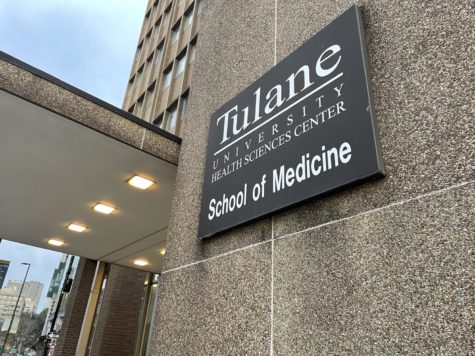
The Tulane University School of Medicine, originally the Medical College of Louisiana, was founded nearly 200 years ago to combat yellow fever and cholera in New Orleans. Since its inception, Tulane School of Medicine alumni and faculty have contributed to several groundbreaking discoveries that continue to shape medicine and the health sciences.
1. The link between smoking and lung cancer
Alton Ochsner, the founder of the Ochsner Medical Foundation, served as the chairman of the Department of Surgery at Tulane School of Medicine from 1926 to 1956. During his 30-year tenure at Tulane, Ochsner was among the first to demonstrate the link between smoking and lung cancer.
While a medical student at Washington University in 1919, Ochsner and his medical school class were invited to Barnes-Jewish Hospital to observe the autopsy of a man who died from lung cancer. At the time, lung cancer was so rare that his professor, George Dock, believed that no one in the class would ever see such an autopsy again.
Seventeen years later while at Tulane, Ochsner saw nine cases of lung cancer within a six-month period. All the patients were World War I veterans who smoked regularly. Ochsner reasoned that cigarette smoking was the primary cause of lung cancer.
Ochsner publicized his theory throughout the 1940s and was met with fierce ridicule and criticism, even from those in the medical profession. It was not until 1964 that Ochsner’s theory on the link between smoking and lung cancer was corroborated in a report by the surgeon general.
2. A surgical cure for aneurysms
On March 38, 1888, Manuel Harris was admitted to Charity Hospital of New Orleans with an enlarged, pulsating mass on his left arm. Rudolph Matas, an 1880 graduate of the Medical Department of the University of Louisiana, now Tulane University, diagnosed Harris with a “traumatic aneurism of the brachial artery.” After several unsuccessful treatment attempts, Matas decided to open the aneurysm.
This was an extremely risky project. At the time, it was widely believed that aneurysms could not be cured surgically. Operating on the aneurysm could mean damaging the blood-carrying section of the artery.
Considering the risks, Matas’ initial plan was to open the aneurysm, assess the clot, apply specialized dressing material and allow the wound to heal naturally.
After the aneurysm was opened, Matas reasoned that suturing the innermost layers of the artery could cure the aneurysm. After successfully suturing the collateral vessel and openings of the aneurysm, history was made.
Harris was discharged from the hospital with a fully functioning arm 15 days later.
This landmark operation, named the endoaneurysmorrhaphy, disproved widely held medical beliefs and was the first surgical cure for peripheral aneurysms. His extraordinary discovery granted Matas medical immortality as the “father of modern vascular surgery.”
3. Binocular microscope
John Riddell invented the first binocular microscope in 1851 to research his theory that yellow fever was transmitted through a blood-borne pathogen. Riddell presented his invention at a meeting of the American Society for the Advancement of Science in Cleveland on July 30, 1853.
Riddell’s microscope used two separate prisms that each produced two distinct images. When viewed through the binocular microscope, the two images merged together to create a stereoscopic, cohesive image. At the time of his invention, Riddell was the chair of the Tulane Department of Chemistry.
4. Key hormones in the brain
In 1977, Andrew Schally, a medical researcher and professor at Tulane, received the Nobel Prize in physiology or medicine for his discovery of key hormones in the hypothalamus, the brain structure that maintains homeostasis.
Schally identified three key hormone structures: thyrotropin-releasing hormones, luteinizing hormone-releasing hormones and follicle-stimulating hormones. The discovery of these hormones in the brain revealed the role of the hypothalamus in controlling the pituitary gland, the anatomical structure that regulates hormones.
Schally’s groundbreaking discovery created new avenues for research in cancer, conception, diabetes, growth and mental disorders.
5. Nitric oxide in the cardiovascular system
In 1986, Louis J. Ignarro, a former professor of pharmacology at Tulane, identified nitric oxide as a crucial signaling molecule within the cardiovascular system. Ignarro’s work built upon previous studies by Ferid Murad, who determined that nitric oxide caused blood vessels to expand and Robert Furchgott, who believed that a substance found in the innermost layer of the blood vessel had a similar expanding effect.
Ignarro united these preceding theories in his discovery that nitric oxide was the substance Furchgott referenced.
Ignarro’s discovery was the first to conclude that a gas could act as a signal molecule in an organism and earned him the Nobel Prize in physiology or medicine in 1998. This groundbreaking research paved the way for new research on the treatment and diagnosis of cardiovascular disease, cancer, shock and impotence.
6. Gelpi retractor
The Gelpi retractor was a device created in 1913 by Maurice Joseph Gelpi, a 1909 graduate of the Tulane School of Medicine. Gelpi developed his self-retaining perineal retractor in 1913, and published his invention in the New Orleans Medical and Surgical Journal.
The Gelpi retractor features sharp, hooked tips that open and hold an incision securely, allowing the surgeon greater accessibility to operate on the area.
While Gelpi’s specialty was in obstetrics and gynecology, the application of the Gelpi retractor has expanded far beyond the scope of any single medical field. Today, Gelpi retractors are one of the most commonly used retractors for holding back tissue during surgical procedures.
7. The roller pump
In 1932, while still a 23-year-old medical student at Tulane University, Michael E. DeBakey invented the continuous-flow roller pump for blood transfusions. Before DeBakey’s roller pump, pumps used during surgeries had metal blades to move blood through the body. Metal blades posed significant risks, as they increased the possibility of complications during surgery and damage to the blood cells.
DeBakey’s roller pump replaced the metal blades with soft rollers that were more effective and safe than existing designs. The development of roller pumps gave way to the heart-lung machine, a medical device that temporarily performs the functions of the heart and lungs during an operation.
The true impact of DeBakey’s invention was not realized until nearly two decades later, when it was used in the first successful open-heart operation.
Today, roller pumps are a critical component of heart-lung machines. DeBakey’s roller pump has saved countless lives and transformed the field of cardiovascular surgery, with many hailing him as “the father of modern cardiovascular surgery.”
8. Cross-species organ transplantation
While a professor at Tulane, Keith Reemtsma, was the first to prove that nonhuman organs could function in humans for a significant period of time.
From 1963 to 1964, Reemtsma transplanted chimpanzee kidneys into 13 human patients. This operation was the first chimpanzee-to-human organ transplantation. While other surgeons had transplanted nonhuman organs into human recipients, the patients died shortly after the operation. One of Reemtsma’s patients was able to return to work for nine months before suddenly dying from a presumed electrolyte disturbance.
The longevity of Reemtsma’s transplants proved for the first time that cross-species organ transplantation could be a viable long-term solution for organ recipients.