


New Orleans’ incarceration system has seen rapid changes under Gov. Jeff Landry’s administration in recent years. Landry declared a state of emergency to address a “lack of capacity to house violent offenders” at the Louisiana State Penitentiary in August. His declaration allows for the expedited repair of the Angola prison. Following repairs, the Angola prison will now serve as a new facility for the U.S. Immigration and Customs Enforcement.
As detention facilities continue to expand in New Orleans, data behind the incarcerated highlight widespread disparities and inequality.
New Orleans and Louisiana stand out as case studies in how jail and prison policies shape lives. The Orleans Justice Center is effectively a pretrial facility. As recently as July 2023, approximately 92% of people in custody had “open matters,” meaning they had not yet been convicted and were awaiting court action.
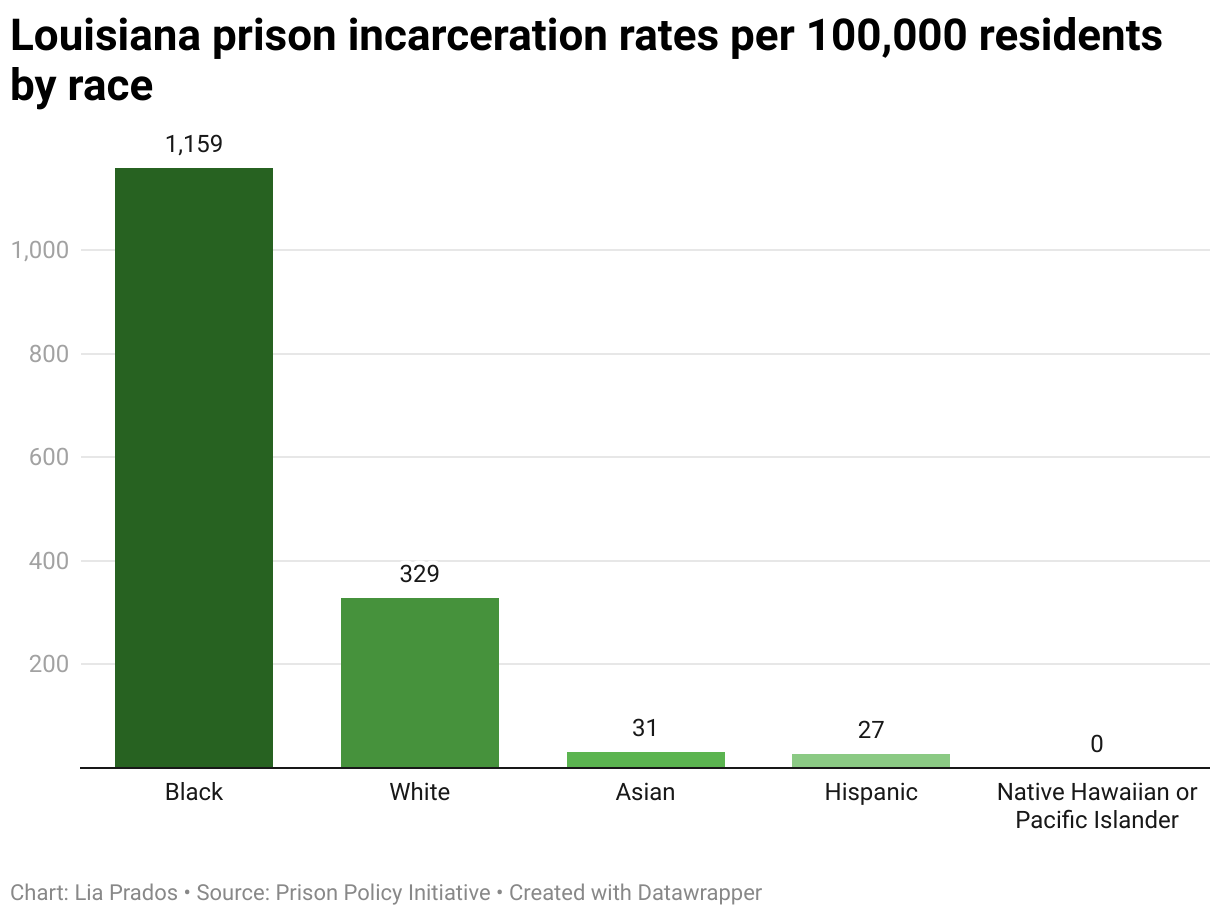
The overall New Orleans jail detention rate was 314 per 100,000 residents in March 2024. But the averages hide sharp inequities: the Black detention rate — 449 per 100,000 — was 5.4 times higher than the white detention rate — 83 per 100,000.
In New Orleans jails today, the typical person behind bars is not yet convicted and is far more likely to be Black.
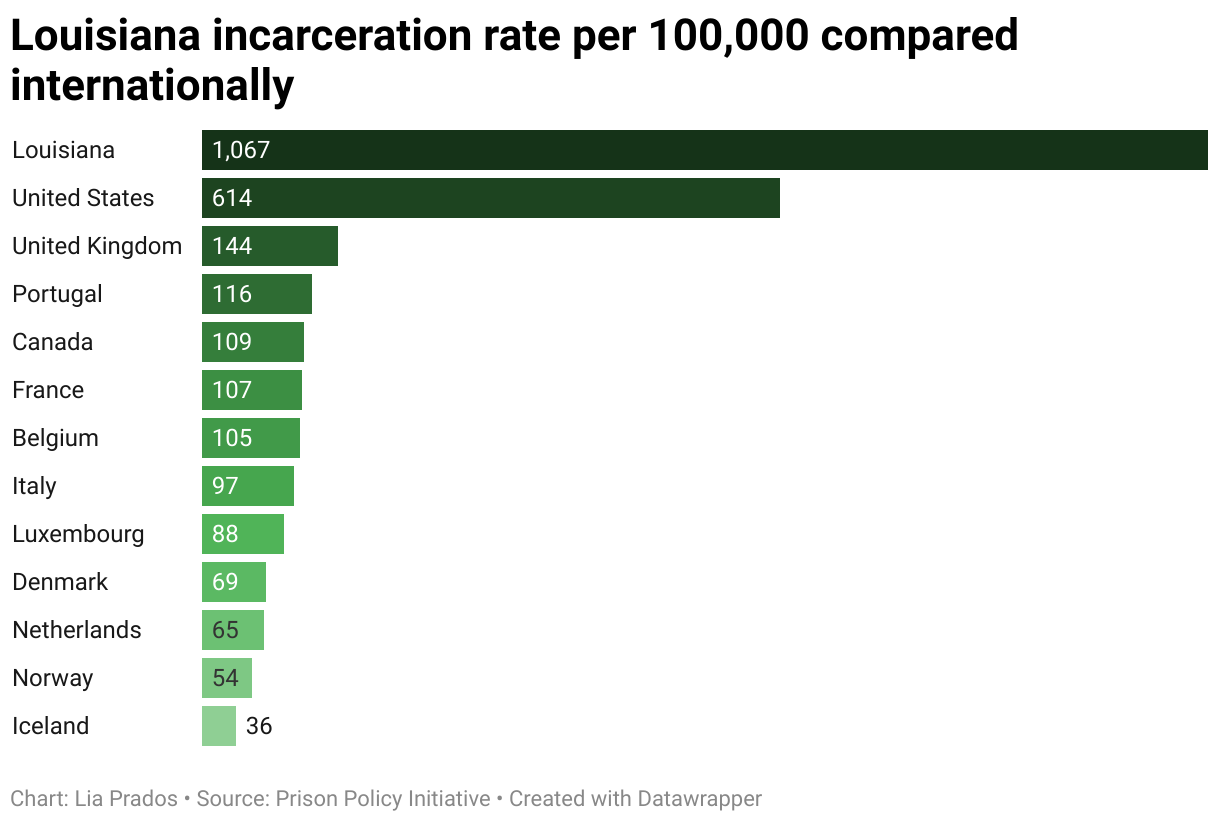
Louisiana is a world leader in incarceration rates. Its total rate, counting both prisons and jails, is approximately 1,067 per 100,000 residents, higher than in any other independent democracy. After some declines during the COVID-19 pandemic, Louisiana’s prison population has risen again, up 8% from 2021 to 2023.
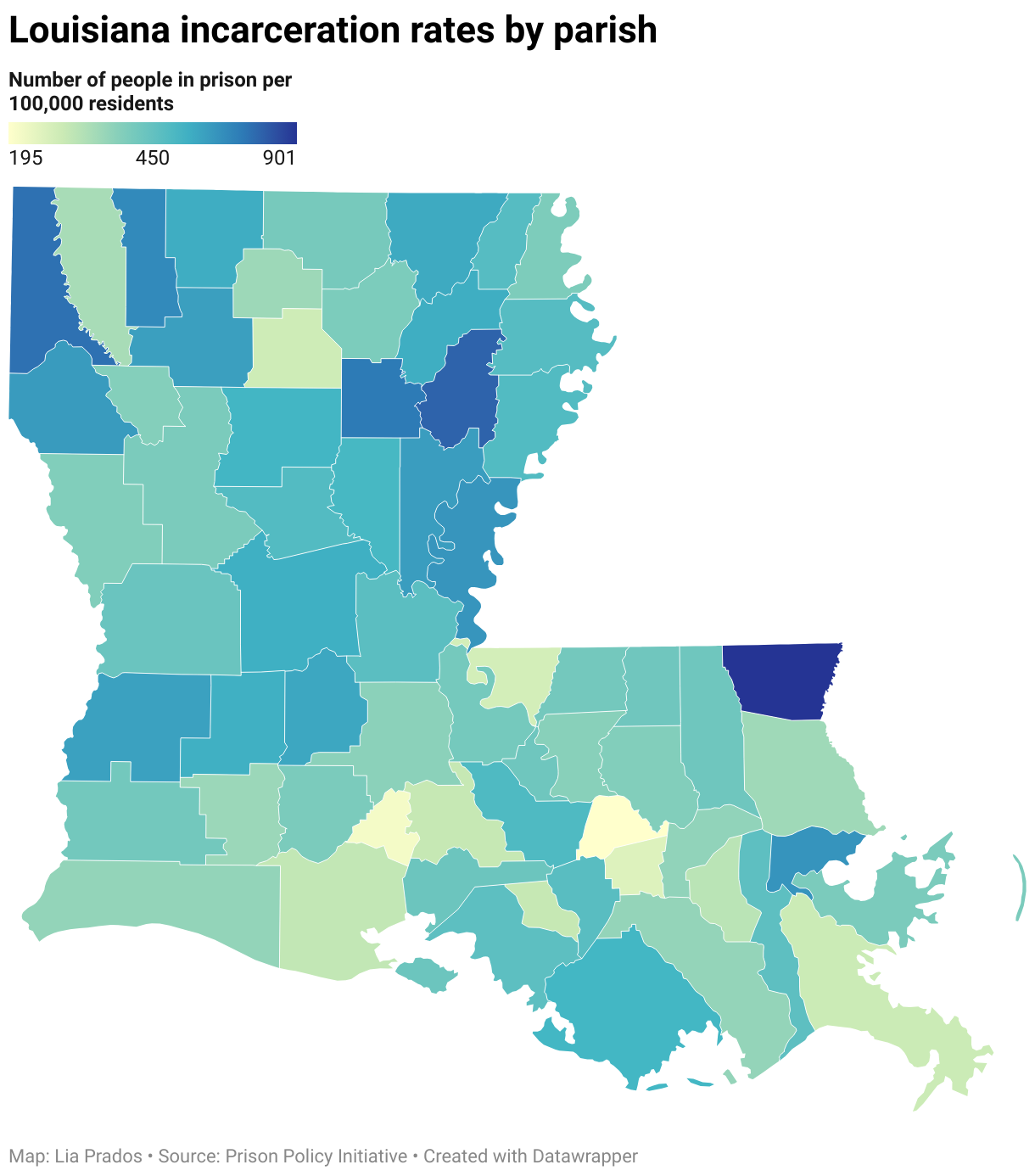
One figure that sets Louisiana apart is that 53% of its state prisoners are held in local jails. Local lockups, built for short-term detention, are now housing people for years. These are without the kinds of education, reentry or treatment programs typically found in state-run prisons.
Nationally, the U.S. held 664,200 people in local jails in mid-2023, a rate of 198 per 100,000 residents. About 70% of those were unconvicted, echoing the same pattern seen in New Orleans. Across the country, racial disparities remain deep: The Black jail incarceration rate, 552 per 100,000, is 3.4 times the white incarceration rate, 162 per 100,000.
Counting prisons and jails together, nearly two million Americans are incarcerated, the highest of any country in the world.
Several forces explain why Louisiana and the U.S. as a whole look this way. Pretrial cases now drive incarceration in jails. Often, people are detained simply because they cannot afford bail, not because they pose a risk. That reality destabilizes families, jobs and housing, while increasing pressure to plead guilty.
In Louisiana, truth-in-sentencing laws limit the amount of time people who are incarcerated can earn off their non-life sentences. Truth-in-sentencing provisions result in individuals being imprisoned for longer periods. These changes have slowed or reversed earlier efforts at reform.