

A recent study by the Public Library of Science highlighted the lack of diverse representation in art museums. The study reported that across 18 major U.S. museums, 85% of represented artists are men and 87% are white. These figures sharpen concerns about persistent gender and racial gaps in the art world. It also fueled longstanding critiques that curatorial practices have favored male and largely white artists.
But are these disparities reflected in New Orleans’ local museums?
The New Orleans Museum of Art and Tulane University’s Newcomb Art Museum each have online databases that list the artists behind their collections. NOMA’s website listed 27 artist records and NAM’s site listed 115.
On both databases, there are more female artists featured than males. At NOMA, women outnumber men 72 to 43. At NAM, women outnumber men 19 to eight.
These lists may not include the entire scope of their art collection. The data should therefore be treated as a sample rather than a complete picture of what each museum offers.
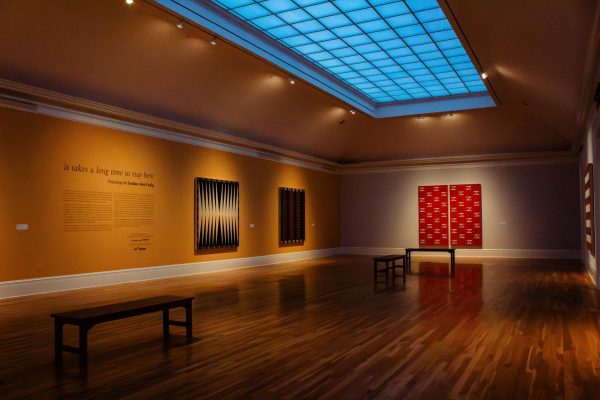
Currently, NAM is featuring two exhibitions — a series of paintings by Jordan Ann Craig and a photography collection on opacity and elusiveness, featuring photos from several female photographers. NOMA has also made female photographers the central part of their current collection.
Race and ethnicity display wider gaps than gender in art representation in these local museums.
In NAM’s 115-artist sample, there were 23 Black artists and 15 Native American or Aboriginal artists. Hispanic and Asian artists made up only 7% of the sample. The collection also includes “two publicly queer” artists, “ one Iranian” and 15 international artists.
At NOMA, Black artists were the only minority group available online. Again, part of that difference is sample size, but it also reflects different acquisition histories and curatorial emphases.
The wide gap in representation in most museums can be attributed to unequal opportunities among minority artists. Structural barriers, including racism, fewer arts programs and weaker professional networks, limit participation for people of color and lower-income artists.
These barriers are not impossible to overcome. The clearest solution is to give underrepresented artists real access to resources and decision-making power. NAM models this by displaying Native American work with labels that center the artists’ own perspectives and invites international artists to broaden audiences beyond the U.S. Contextual labeling, community co-curation and inclusive acquisitions can truly build visibility instead of gatekeeping.
A • Nov 16, 2025 at 6:08 am
Your numbers don’t add up in the third and fourth paragraphs.