


Louisiana has 53,000 federal civilian workers, many of whom are now at risk of unemployment after the U.S. Department of Government Efficiency’s hiring freeze was placed on Jan. 20. So far, DOGE has laid off 279,445 federal employees within the first three months of 2025, marking a 672% increase in federal unemployment from the first quarter of 2024.
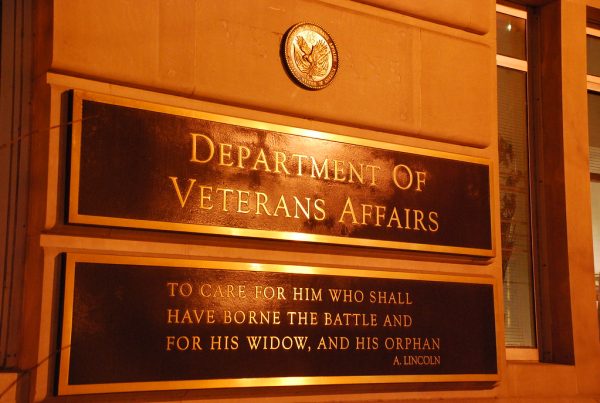
The federal hiring freeze’s effects will be profound for civilian employees, students and educators who work with the U.S. Department of Defense and U.S. Department of Veterans Affairs. The DoD was originally exempt from the hiring freeze, but as of March 2, the department is now subject to the freeze.
The impacts of a reduced government civilian staff are becoming apparent in Louisiana’s DoD-funded military installations, like the Barksdale Air Force Base, Fort Johnson, Naval Air Station Joint Reserve Base New Orleans, Marine Corps Forces Reserve and the Naval Information Warfare Center Atlantic. U.S. military spending supports approximately 77,000 Louisiana jobs, supporting jobs in defense contracting, cybersecurity and infrastructure development.
Louisiana veteran Chris Cox has worked at Veterans Affairs for 10 years after almost 24 years with the Marine Corps. He now serves as the communications campaign development chief for the Office of Integrated Veteran Care, Veterans Health Administration and the VA.
Cox became familiar with the services provided by the VA when his wife, Jamie, was battling amyotrophic lateral sclerosis. The VA worked closely with their family to treat Jamie’s condition until she died from the disease in 2023.
“I owe the VA a lot. Not just for their support and their services and health care and the caring way in which they did for Jamie, but also understanding the fact that a family member of the veteran is impacted by the veteran’s health as well,” Cox said.
But with the federal hiring freeze, “I’ve already become comfortable with the fact that I’m probably losing my job here this year,” said Cox.
The loss of federal civilian staff will make access to services, like those used by Jamie, difficult with fewer employees to process claims, book healthcare appointments and work the VA car phone lines.
Veterans make up 25% of the VA’s employee base, which Cox explained is important for veterans receiving care because they do not have to translate their experiences in the military to someone who cannot relate.
“You take away a portion of the most in tune element of that employee base, you’re limiting veterans’ access to care because then the veteran has to translate their experience to someone who’s never had that experience,” Cox said.
Active military personnel are not subject to the hiring freeze. However, retired military personnel working in VA are. Only healthcare professionals working at government-funded veterans’ organizations are exempt.
There could be a significant decrease in the availability of services for veterans seeking assistance from the VA as a mass layoff takes place. By August, 83,000 employees of the VA nationwide are expected to be laid off.
Veteran and former military sergeant Francis Daigle receives services from the VA due to health conditions caused by exposure to Agent Orange in Vietnam. Since the hiring freeze, Daigle said it can take two or three months to schedule an appointment with the VA, up from two to three months before.
A friend of Daigle’s is physically disabled in a wheelchair and lives in rural Louisiana, making it difficult to travel for VA services, so he relies on telehealth services. Since the freeze, Daigle said his friend is more often left on hold and has not had his usual in-home visits from VA workers.
The Veterans Crisis Line, the line veterans and family can call when they are struggling with mental health or suicidal thoughts, is experiencing staff reduction as well.
Morale is also at risk with the hiring freeze.
“If you keep people really happy and excited about their jobs and have good morale, it’s much more efficient for your company,” Daigle said. “If morale goes down, what does that do to the people that need the services of the VA?”
Tulane University professor of political science Miruna Barnoschi said that in theory, a federal hiring freeze is a plausible means of consolidating the government. The complex consequences come to fruition once the freeze is put into practice.
“There are certain jobs that can be exempt and right now we are in limbo because it is unclear that those exemptions are going to go through,” Barnoschi said. The best way to become exempt from the freeze would be a letter of advocacy from the U.S. Secretary of Defense Pete Hegseth.
Barnoschi is trying to secure an exemption to the freeze to reinstate her role as a professor of military and security studies for the coming academic year at Maxwell Air Force Base.
“I have been contacting literally everyone,” Barnoschi said. She has reached a senior GOP chief of staff, but feels an exemption for her professorship is unlikely.
Tulane student Harper Hansen received a summer internship offer from the Defense Counterintelligence and Security Agency in February after completing the undergraduate federal intern application, an interview, a background check and two drug tests. Then, the DoD hiring freeze came less than a month later.
Even though it seems for now her DoD internship will happen, students like Hansen are looking to the private sector instead for work, but Hansen is staying optimistic.
“I know there is always going to be a need for these jobs … It is just a matter of how bad you want it and how long you are willing to wait for it,” Hansen said.
“The government is moving too fast … We’re taking a machete to all these programs all over the United States,” Daigle said. “We should be using a surgical scalpel … slowly and more methodically.”