


 Tulane University’s acceptance rate was an exclusive 14% for the class of 2029, a 1% increase from last year, according to Shawn Abbott, the vice president for enrollment management and the dean of admissions. This slight increase corresponds to approximately 200 additional students admitted. However, the number of students who accepted their admission offer is about the same as last year, around 1,850.
Fifteen percent of the new class are first-generation college students, up from 14% in 2024. Tulane has seen an increase in first-generation and low-income students for at least the past three years.
Fourteen percent of the class of 2029 are Federal Pell Grant recipients, a grant program that helps middle and low-income students attend college. President Donald Trump’s “Big Beautiful Bill,” signed into law on July 4, makes changes to applicant eligibility and will go into effect next year.
Tulane’s $92,000 annual price tag makes financial aid a significant part of accessibility for students. It is unclear how changes to federal student aid will impact admissions and enrollment in the coming years.
In addition to need-based aid, Tulane awarded over $140 million in scholarships to undergraduates in the 2023-2024 academic year. Tulane distributes merit scholarships without consideration of the financial needs of the recipient.
Trump has also taken swings at international students during this second term, revoking visas for students who engage in protests and, most recently, limiting how long international students can stay in the U.S. for school.
Research from the Association of International Educators found that international student enrollment could drop by as many as 150,000 students this fall, a potential loss of $7 billion for colleges.
After being accepted to an American university, international students must apply for a visa with the U.S. Department of State to attend, a process that costs hundreds in fees and can take months.
At Tulane, Abbott said there were no noticeable changes in Tulane’s international applicant pool this year, and Tulane is enrolling a similar number of first-year international students this year as last year. It is unclear how the new federal procedures will affect enrollment in the future. Six percent of the first-year class are non-U.S. citizens.

Fifty-seven percent of first-years identify as female, a small but noticeable drop from 63% last year. Before this year, female enrollment at Tulane had been steadily climbing, a trend mirrored by colleges across the country.
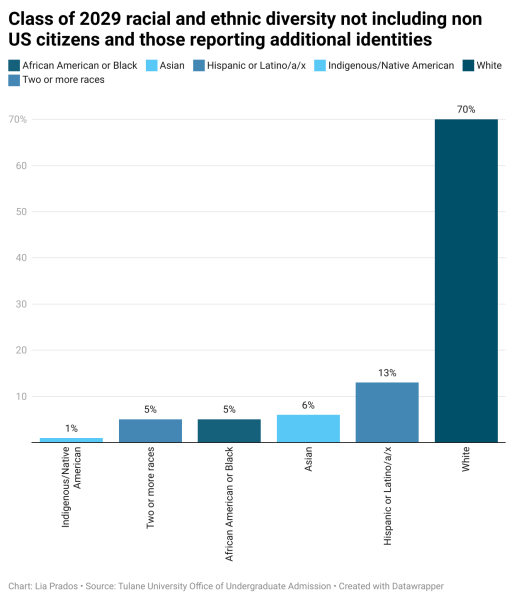
Racial demographics of the class remain largely the same as the class of 2028, though the undergraduate admissions page now includes a disclaimer that Tulane does not use race or sex as selection criteria.

Ten percent of the new class identifies as LGBTQ+, down from 11% for the class of 2027 and 13% in 2023. This is the first year Tulane has disclosed both the legal sex and gender identity of its youngest students on the class profile.