


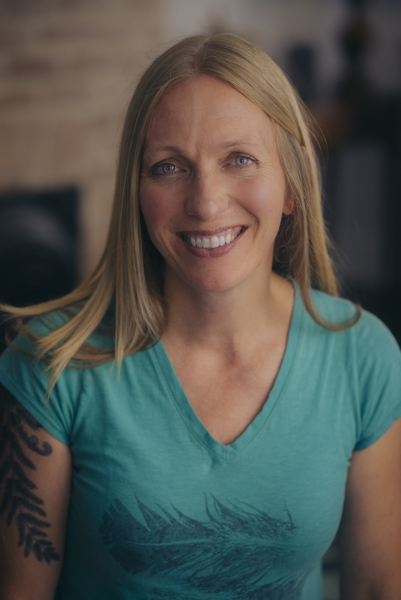
This summer, staff research scientist Kimberley Terrell alleged a breach of academic freedom at Tulane University and resigned in protest from the Tulane Environmental Law Clinic.
“We again confirm our absolute commitment to academic freedom,” President Michael Fitts said in an email to the Tulane community in August, after her resignation.
Terrell’s research showed that the jobs created by the petrochemical industry were not distributed in the Black communities in which the plants are located.
“What we found was, even though petroleum and chemical plants mostly go into neighborhoods of color, the people who work at those plants are disproportionately white,” Terrell said.
In April, after her study was published, Terrell said she received an email from the dean of the Tulane University School of Law that stated the clinic’s public communications must be pre-approved.
“I get an email from the dean saying, effective immediately, all of your communications with anybody outside of the law school have to be pre-approved by me,” Terrell said.
Her findings are related to Cancer Alley, where a series of predominantly Black communities from Baton Rouge, Louisiana to New Orleans live alongside petrochemical plants, spanning 85 miles. The waste from these operations puts the neighboring citizens at risk of severe health complications.
Statistics on the employment racial disparity have been publicly available, but had yet to be explicitly referenced in a scientific context until Terrell’s research.
“I didn’t really expect that study to be controversial because … it’s publicly available data, it supports what a lot of people already know to be true,” Terrell said.
Yet, it was not the content of the research, but the timing of its release that got statewide attention — during Tulane Day at the Louisiana State Capitol.
“Tulane Day was wonderful. It was going great. Then suddenly, there was a ripple through the crowd,” Terrell said in reference to a conversation with Provost Robin Forman. “Somebody said, ‘oh, Tulane is anti-chemical industry because of this study that just hit the news today,’”
Tulane Day, an event that recognizes Tulane’s contribution to the state’s economy, was celebrated on April 16. While Fitts was in Baton Rouge representing the university at the state capital, the U.S. News and World Report publicized Terrell’s findings.
Terrell alleged Gov. Jeff Landry threatened to withhold funding unless Fitts made changes to the environmental law clinic. Landry later denied making any such threat through a spokesperson.
The clinic’s research was already available for a week before it gained media attention. It was published on April 9 after a year-long revision process.
In email correspondence obtained by The Tulane Hullabaloo, dean of Tulane Law School, Marcilynn Burke said after Tulane Day “election officials and major donors” have expressed hesitancy to support Tulane because of work the law clinic is doing.
Soon after, new communication protocols were implemented for the clinic.
“All external communications that are not client-based — that is directly related to representation — must be preapproved by me,” Burke said in the email explaining the new procedures.
“Debates about how to best pursue the teaching mission of law clinics have occurred at law schools throughout the country and at Tulane for years,” Tulane spokesperson Mike Strecker said in a statement to The Hullabaloo.
Terrell said she interpreted the protocol as a gag order, impeding the law clinic’s teaching mission. The new protocols mean the clinic “can’t talk to anybody unless it’s preapproved,” Terrell said. “That really violates the fundamental principle of academic freedom.”
In June, Terrell determined her academic freedom was compromised and resigned. She now works as a research scientist with the Environmental Integrity Project.
According to the Tulane Faculty Handbook, faculty are to “be free from institutional censorship and discipline.”
“The Faculty Handbook kind of goes out of its way to say, ‘hey, these protections apply to everybody, even if they’re not faculty,’” Terrell said. But after the communication protocol was changed, “it became clear to me that the dean had not actually read the faculty handbook.”
In an email obtained by The Hullabaloo, Provost Robin Forman said the views expressed by the clinic could be interpreted as the opinions of Tulane or Tulane Law School as a whole. In this regard, “it is crucial that we remain cognizant of this potential confusion by the public,” Foreman said.
“You can’t have a functioning university if students and staff and postdocs are all subject to political interference,” Terrell said.
Clinic researchers work towards “filling in the gaps,” Lisa Jordan, a clinical professor of law and director of the Environmental Law Clinic, said. The clinic is a place clients can turn to for assistance when subjected to political discrimination.
“We are an essential resource for people in Louisiana, who … have everything going against them,” Jordan said. Their clients are “trying to fight a system where pretty much everyone is on the other side, and we are one of the very few legal resources that such groups can go to to have access to court.”
Though the clinic’s research acts in defense of certain views, the staff does not have “the right to impute individual views to the university,” Forman said in an email obtained by the Hullabaloo.
“Academic freedom is essential in a university and should apply to both teaching and research. Freedom in research is fundamental to the advancement of truth,” Terrell said. “I’m also a Tulane alum … So I also feel I have a personal stake in making sure that Tulane is still a respected, functional, ethical university … not a place that’s caving to political pressure.”
Bryce Oufnac contributed to the reporting of this story
Correction: An earlier version of this article misspelled Kimberley Terrell.
LC • Sep 6, 2025 at 4:58 pm
Excellent article.
Her name is misspelled in the first paragraph.
DDGreen • Sep 6, 2025 at 2:13 pm
This censorship extends to dissertation topics and research at most institutions. For the next four years, the body of scholarly work will be shaped by the current political agenda. At the risk of funding loss, student expulsions, and visa revocations, academic freedom has become an ideal and no longer a guarantee. I didn’t expect to see it at Tulane.
Danielle Miller • Sep 4, 2025 at 1:49 pm
Thank you for sharing this important story. The censorship of Professor Terrell is a devastating blow to the residents of Cancer Alley, to current and future Tulane students, to Tulane’s reputation as a bastion of academic leadership and civil rights, and a blatant example of corporate interference in academics. I hope President Fitts and the Trustees will reverse this decision and stand up for academic freedom.
CJM • Sep 4, 2025 at 11:10 am
There goes any money I was ever going to donate to Tulane or Tulane Law. (Alum of both here.)
Shame on you. Without academic freedom, you’re not a university, just a glorified grammar school–an extremely overpriced one at that.