


In this online age where short-form videos and AI slop reign, discussion of how culture is produced and disseminated is increasingly common. Spike Lee’s new film “Highest 2 Lowest” is a formidable contribution to this discourse, combining conspicuous nods to the cinematic canon, didactic downloads of Black history and political commentary from today’s internet. Here, an Ice Spice cameo exists within the adapted frame of the 1963 “High and Low” by Akira Kurosawa, a masterwork of Japanese film.
Earlier in his career, Lee set his films on familiar turf — his native Brooklyn streets — capturing life using bold, MTV-inspired cinematography. In “Highest 2 Lowest,” he begins by floating above the city: The opening credits roll over seductive shots of the New York skyline to the tune of “Oh, What a Beautiful Mornin’” from the musical “Oklahoma!”. The camera focuses on the glass-paneled Olympia Dumbo apartment complex, where the film’s protagonist — or perhaps anti-hero — resides.
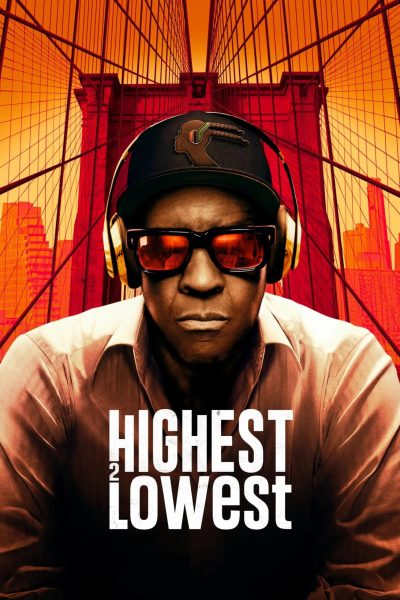
The film follows one-percenter David King, played by Denzel Washington, a former rap producer and now music mogul in the mold of 2010s Jay-Z. David is the founder of Stackin’ Hits records, a fictional label dedicated to artists working in the Black American music tradition, and is a pillar of New York’s Black establishment.
Their home is a homage to Black excellence, an urban Wakanda-esque penthouse bedecked with photos of stars like James Brown, Stevie Wonder, Aretha Franklin and art by the famous Jean-Michel Basquiat. David attributes his success to having “the best ears in the business,” his auditory acumen serving as the foundation of his empire and his family, where he also serves as the chief accountant and decision-maker. Although his wife Pamela, played by Ilfenesh Hadera, has an early monologue where she asserts herself as an important voice in the family — an obvious revision of Kurosawa’s plot — she quickly reassumes her role in the background.
Belied by the opulence of King’s lifestyle, Stackin’ Hits industry dominance has begun to slip with the rise of streaming platforms, and a lucrative merger comes across David’s desk. He refuses, choosing instead to hold on to the company’s original identity. A wrench is soon thrown into the smooth-oiled system of his life when his son, Trey, played by Aubrey Joseph, is apparently kidnapped, along with the son of his driver and close friend, Paul Christopher, played by Jeffrey Wright, and held for a $17.5 million ransom.
Although the action slows around the middle, Washington’s performance is captivating, simultaneously sympathetic and grotesque. We also get some of the most tender scenes between Washington and Wright, worthy sparring partners as actors, but as characters critically unmatched in terms of power.
The film truly kicks into gear when King leaves his palatial perch and descends into the subway system to carry out the exchange with the kidnapper, closely mirroring the iconic scene in Kurosawa’s film. The first half of the film fully realizes itself as a police procedural. In the second half, King ventures deeper into the city and his past, whose literal location is the neighborhood where he and Paul grew up and where the kidnapper now resides.
This is where Lee breaks with Kurosawa most; while “High and Low” is a realistic vision of law enforcement where the cops ultimately apprehend the villain, “Highest 2 Lowest” reads as a dream sequence wrapped in a realist guise where Washington continues as the protagonist and a self-made man who will get the job done. Interestingly, despite all of King’s flaws, Lee’s camera seems totally taken with him: The portrait of his suaveness, his charisma, his street-style eloquence is so complete that one almost forgets his questionable moral choices.
There is much to be said for Lee’s representation of Black excellence and wealth. At times, it was rousing: people in the theater cheered when a Black female detective proudly attributed her intellect to her education at Spelman College.
But the representation of the King family also has its limitations: By always adopting David’s perspective and compelling the audience to marvel at him, Lee perhaps inadvertently endorses the view that such extraordinary wealth should not be questioned as long as one puts it towards good causes. Lee is known for his attentiveness to contemporary political discourse, so it is surprising that he comes across as deaf to the recent outcry against billionaires. This also results in the rich power dynamic between David and Paul going relatively unexplored in the film’s second half.
Lee’s relative conservatism makes the film no less of a thrilling watch. Visually stimulating, dramatically gripping and intellectually intriguing, it engages the viewer at all levels. “Highest 2 Lowest” is a film about production — of music, identity and power — told from the perspective of the producer. If not fully radical in its critique of wealth, it remains an important reflection on the making of culture and legacy, and who gets to own them.