

Every year at Tulane University, members of the sophomore class are met with the thrilling yet pivotal decision of declaring their major. One’s college major reflects the path they are likely to go down in their professional life post-graduation. A student’s major shapes their intellectual expertise and influences their opportunities both inside and outside the classroom.
When a student declares their major, they are assigned a departmental advisor to guide them through course selection, electives, opportunities and the degree process. Declaring a major can feel daunting, especially with the added pressures of our modern world. College used to promise students stability after graduation, but now students face career goalposts that are constantly in motion.
In this digital revolution, artificial intelligence is slowly taking over traditional jobs. This has made some students reconsider the value of their major.
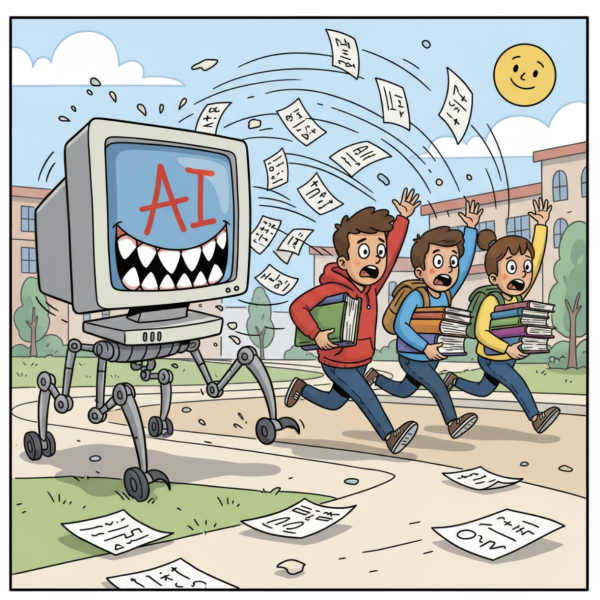
“Artificial intelligence is expected to fundamentally transform the global workforce by 2050, according to reports from PwC, McKinsey, and the World Economic Forum. Estimates suggest that up to 60% of current jobs will require significant adaptation due to AI. Automation and intelligent systems will become an integral part of the workplace,” career development writer Jack Kelly said in Forbes.
AI is predicted to eliminate entry level jobs first, specifically, those in data analysis and financial modeling. Tulane is taking steps in the right direction by adding minors like the Business Analytics and AI Certificate, which combines students’ knowledge with business analytics and their knowledge of how to work with AI.
There are some qualities in humans that AI likely cannot replicate. Artificial intelligence may never be able to replicate a successful client phone call personalized by the use of charming jokes and storytelling. AI cannot replicate the empathy of humans and the importance of face-to-face interaction. This is something that must be preserved by universities.
Classes focused on empathy and interpersonal skills could benefit the next generation. It’s time for students to hone their skills that will never become outdated or overtaken. Social skills are becoming increasingly more important in the modern labor market, and with the constant use of cellphones and technology, newer generations need opportunities to practice them.
Artificial intelligence is bound to transform the way we learn, work and execute our everyday tasks, whether that is in a classroom or in the corporate offices. Universities like Tulane should continue to adapt to these ideas. The University of Florida has created course series such as AI Fundamentals and AI Ethics to help prepare students for a corporate world intertwined with AI. Their initiative will help students prepare and adjust to this way of work. Since AI will most likely be replacing entry level jobs, it is vital that students are learning to work with it. If students continue to study their majors and master their expertise in a context of a traditional, pre-AI world, they will not be prepared for what is to come.