

Tulane University kicked off its second annual Future of Energy Forum on Wednesday, Sept. 10. The guest list included policy experts and scientists. However, most of the invited speakers were high ranking officials at energy and oil companies, with no less than 15 current and former CEOs, including the current president of Shell USA.
This guest list was indicative of Tulane’s desire to play both sides, attempting to signal that it is on the frontlines against global climate change while still marketing itself as an ally to the incredibly powerful oil industry.
In a word: greenwashing, which is defined as the act of “misleading the public to believe that a company or entity is doing more to protect the environment than it is,” according to the United Nations.
Shell is especially guilty of this. In 2020, Shell failed to meet its own target to spend $6 billion on renewable energy sources. The company is untrustworthy with regards to sustainability and environmentalism but, unfortunately, is ubiquitous in its economic power.
Tulane’s Energy Forum was established to gather experts across fields to reconcile the opposing goals of maximum economic output and sustainability with the hope of finding some balance. Tulane, as a university in Louisiana — sometimes crudely called a petro-state — is the perfect place for this discussion due to the state’s decaying gulf coasts, public health concerns and large oil reserves.
So, it is difficult to fault Tulane for hosting the event and inviting these companies. In fact, it is easy to argue that the university is working the best it can within a well-established broader system. This is understandable, but not exactly audacious.
The fact that sponsors of the event include Shell and Entergy is also cause for skepticism.
Compared to Shell, Entergy is a company far smaller in scale but well known to Louisianians, though not exactly revered. The company is often opaque and charges high prices for low quality energy. Now, Entergy wants to build three new power plants for a massive AI data center by Meta in north Louisiana, requiring enormous amounts of power to run the center and fueled by methane, which seems likely to exacerbate the infamous problem of Louisiana’s “Cancer Alley.”
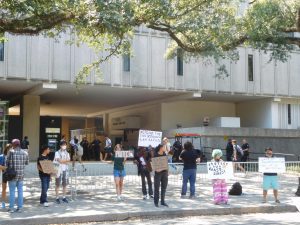
Tulane is not a singularly powerful force that can stop these companies from doing what they do. I am not arguing that here. I have not even described the full extent of the fossil fuel industry’s ties to the university.
Rather, I am arguing that we as citizens must hold powerful companies, our universities and branches of state governments accountable and that their actions must be critically examined. I hope that Tulane does so in this second Future of Energy Forum, but I am not counting on that, given Tulane’s previous willingness to capitulate to political powers So, more than anything, I hope Tulane proves me wrong.