


About two hours after a heartfelt goodbye with my parents, who, for the first time, left me all alone to embark on the journey of my freshman year at college at Tulane University, I found myself sitting in the Malkin Sacks Commons. This first venture into a hall of seemingly never-ending food options was exciting for about two weeks.
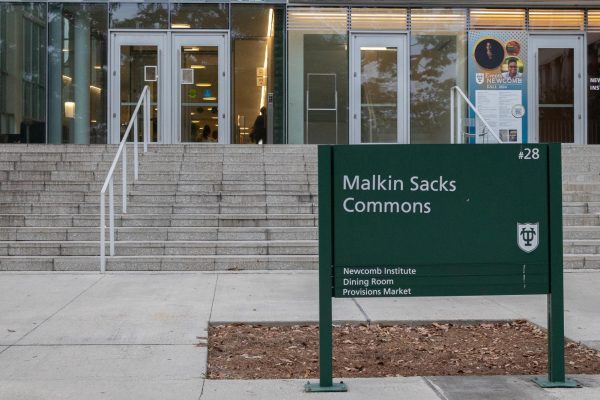
After the initial enthusiasm for the Commons wore off, I found myself creatively devising ways to avoid eating the same dining hall sandwich and salad, stretching my allocated Wavebuck$ as far as possible. I began to long for sophomore year, when I could no longer exist in the shackles of unlimited meal swipes and minimal Wavebuck$, but rather move to a dining plan that offered me more opportunities to eat in the Lavin-Bernick Center for University Life, and more importantly, avoid the Commons.
However, in the spring of my freshman year, I opened my computer to select my meal plan, and to my dismay, I did not see the TU 7 option I had hoped for, which would have provided me with seven meal swipes a week and $1,100 Wavebuck$ per semester. Rather, my only options were the unlimited 250, unlimited 500 or the Kosher Dining Plan — all meal plans offering unlimited Commons swipes and limited Wavebuck$. Tulane’s decision to switch to more minimal meal plan options left me feeling confused and restricted, baffled as to why I had less control over what and how I could eat on campus.
Tulane’s policies that further limit students’ freedom over basic factors within their own lives continues in their new housing requirement. Now, all juniors who are not going abroad are required to live on campus during their third undergraduate year. All juniors going abroad in the spring semester must live on campus in the fall.
These students are not only limited in terms of where they can live, but are also forced to have a dining plan for a third year. Even the second and third-year students who live in the apartment-style Aron Residences and have a kitchen which equips them to effectively cook for themselves must purchase a comprehensive dining plan.
Juniors are given the option of the TU 10 plan, which allows them to have ten meal swipes a week and $600 Wavebuck$ per semester. This one additional choice does not provide enough Wavebuck$ for students to eat the majority of their meals in the LBC, once again forcing them to rely on the Commons as a primary source of food.
The reason to limit dining plans is confusing, as it appears that the Commons is not equipped to handle such a large number of students now eating the majority of their meals within the space.
While the Commons certainly felt crowded last year, the number of students choosing to eat primarily in the LBC prevented complete chaos in the dining hall. However, now that all first, second and third-year students must have such meal-swipe-heavy dining plans, the Commons feels like a zoo any time one walks in. The lines for food are long and slow-moving, it can be difficult to find a table and one can almost guarantee bumping into at least three people when trying to maneuver around the food stations.
Students might accept the decision with more grace if the Tulane administration had provided a logical explanation for this switch. Even with Tulane’s stated justification that on-campus living fosters engagement and eases pressure on surrounding neighborhoods, the reasoning still fails to explain why dining plans must become more restrictive in the process.
Students find themselves more limited than ever, angry that they lack control over a fundamental aspect of their life. This restriction begs the question of how the university can expect us to act like adults when its unnecessary control leaves us feeling like children.