


-
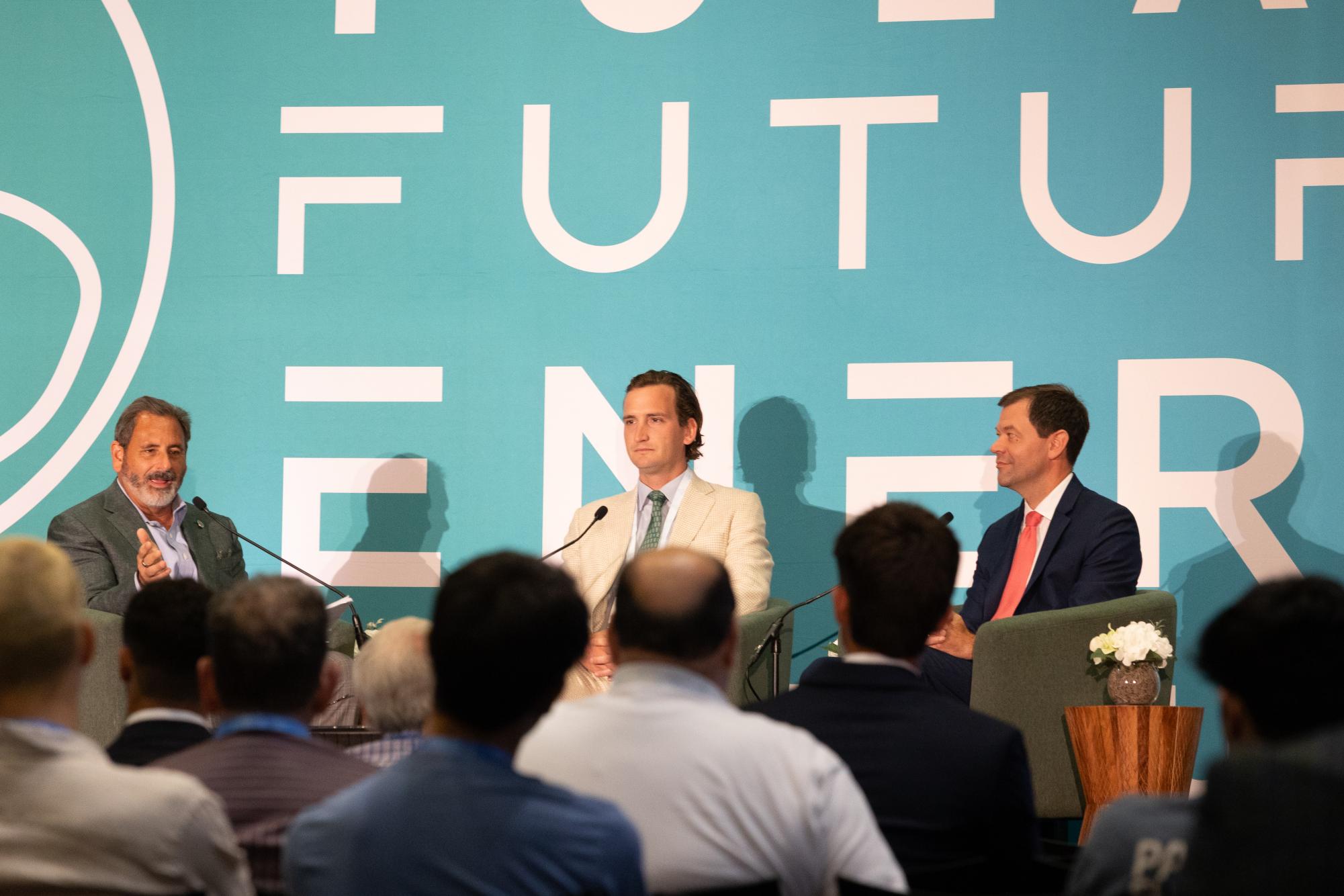
Casey Herman moderates a panel between Stephen Swiber and Luke Bolar.
-
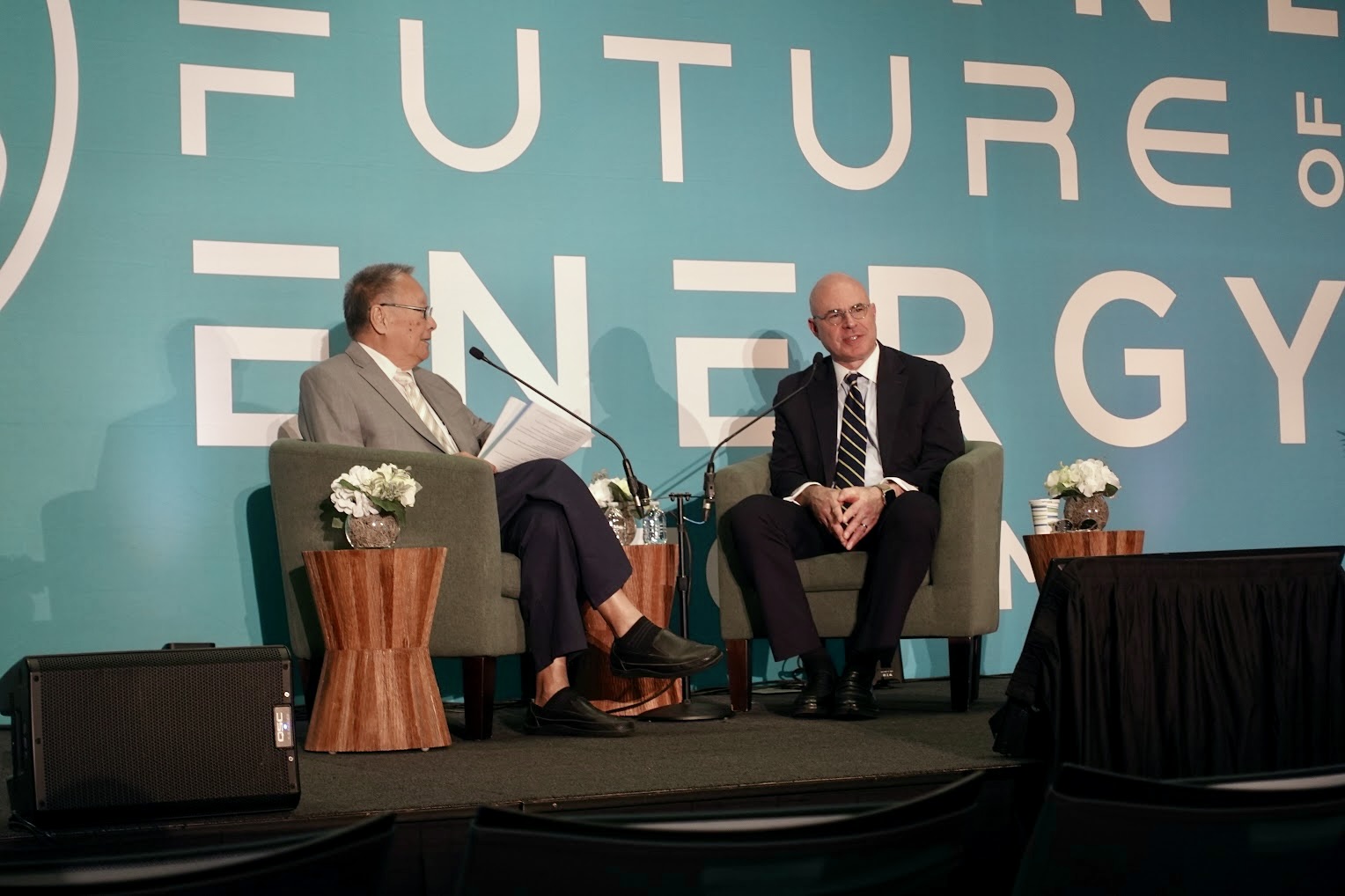
Managing Director at Clearview Energy Partners LLC, Kevin Book, speaks at Tulane’s Energy Forum about Tariff Policy Impacts on Global Energy Trade.

Thousands of students, executives, lawyers and consultants descended upon Tulane University’s campus for the second annual Future of Energy Forum this past week.
This year’s theme was “powering the future: innovation, competition, and collaboration.”
The forum comes amid a global trend of rapidly rising energy demand, driven by artificial intelligence data centers, rising temperatures and advanced manufacturing.
State officials highlight Louisiana’s role in global energy market
“Energy powers our state’s economy, and we have it in abundance,” United States Rep. Julia Letlow, a Republican representing Louisiana’s fifth congressional district, said in a prerecorded message.
Louisiana accounts for 9% of natural gas production in the United States and possesses 16.2% of the country’s crude oil refining capacity, according to the U.S. Energy Information Administration.
“It’s great we have the cheapest gas in the country,” Stephen Swiber, deputy secretary of the Louisiana Department of Energy and Natural Resources, said. “We’re proud of it.”
Louisiana serves a critical role in global liquid natural gas supply chains, exporting 741 billion cubic feet of LNG a day, three-fifths of total U.S. LNG exports.
“We’re enabling democracy throughout the world,” Swiber said. “We’re freeing people from despotic gas suppliers by shipping it out right there in Lake Charles.”
A major investment in Louisiana is Meta’s new $10 billion, 4 million-square-foot data center in Richland Parish in northeast Louisiana, a project that is expected to consume massive amounts of energy.
“When you’re talking about a state that can build a $5 billion to $10 billion, it’s maybe even $20 billion plant,” Swiber said. “I don’t think anybody has as many of those locations as the state of Louisiana.”
“Our state already has infrastructure, the skilled workforce and the industrial base to make us a natural hub for hydrogen production, transportation and use,” U.S. Rep. Troy Carter, a Democrat representing Louisiana’s second congressional district, said.
University positions itself as energy leader
Tulane used the summit to position itself as an energy leader.
During the forum, President Mike Fitts announced a new interdisciplinary institute to bring together all of Tulane’s energy-related work.
“I’m thrilled to preview a major new initiative that will unite all of our work during Tulane in the energy space … the Tulane Institute of Advanced Energy Studies,” Fitts said.
The institute aims to bring all of Tulane’s energy research under one roof, unifying work in the fields of law, science and business.
The forum had almost double the attendees as the last Future of Energy Forum, with 1,791 guests registered, according to Tulane spokesperson Mike Strecker. Of these, 437 were students, while 164 were faculty and staff.
“The Future of Energy Forum exemplified Tulane’s interdisciplinary mission by bringing students, faculty, staff, industry and policy leaders together with community members from throughout the region to explore one of today’s most urgent and compelling challenges,” Fitts said in a statement.
Energy demand rises in warming world
As demand for energy increases, so do the effects of climate change. The World Meteorological Organization, a United Nations body, predicts global mean temperatures will remain at or near record highs over the next five years.
“You have to admit it’s hotter than it’s ever been,” Rep. Carter said. “We have storms in places we’ve never had them before. We’ve seen mudslides and storms and tornadoes and hurricanes … climate change is real.”
According to the EIA, energy demand in the United States will reach a record 95.5 quadrillion British thermal units in 2025, a unit of measure of energy consumption. The U.S.’s energy consumption is second only to China’s.
“We don’t know how long we have, and there’s plenty of evidence that would indicate that the change is already happening, and that change is quite significant,” Bobby Tudor, founder and CEO of Artemis Energy Partners said.
“Now, at this moment in history, there’s perhaps no issue more globally relevant than energy,” Fitts said.