


Just over a year after Sabrina Carpenter’s first Billboard No,1 album, “Short n’ Sweet,” which brought high acclaim with singles like “Espresso” and “Please Please Please,” she released her sophomore album “Man’s Best Friend” worldwide.
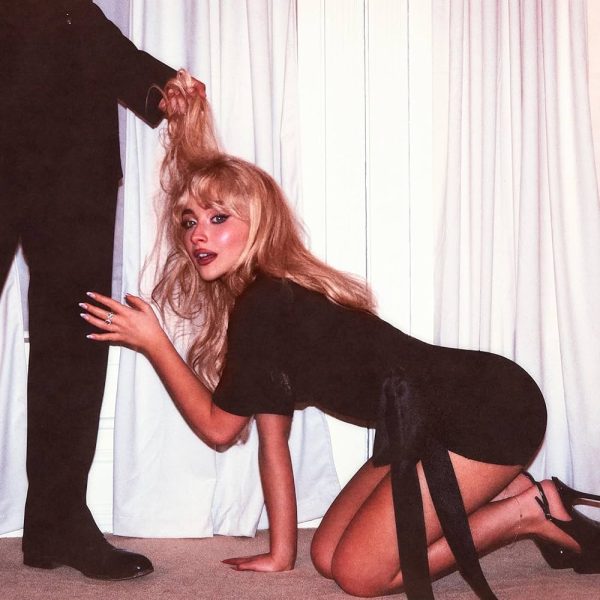
The album cover received backlash from some music critics, including Arwa Mahdawi of The Guardian, who were critical of the suggestive nature of the image. Carpenter later clarified in an interview with CBS News that it instead is meant to refer to “being in on your lack of control and when you want to be in control.”
Just like her previous album “Short n’ Sweet,” Carpenter created a pop album made for the radio. There is also a return to sexual lyrics that take away any radio friendliness. Hits like “When Did You Get Hot?” and “Tears,” two songs that leave out no details about Carpenter’s passion for sex.
In fact, the abrasive nature of each song’s lyrics makes for an amusing first listen, especially “House Tour,” whose metaphor equates Carpenter’s body to a house for some laughs.
Yet, once the lyricism is taken in, the instrumentation across “Man’s Best Friend” is easily her best and makes for one of the outstanding pop albums of the year. Largely produced by 11-time Grammy Award winner Jack Antonoff, “Man’s Best Friend” featured a sitar on “Manchild,” a banjo on four tracks, a trumpet on “Go Go Juice” and “Goodbye,” among other instruments that helped “Man’s Best Friend” touch on funk, disco and synth-pop elements.
I found Carpenter to be her best on some of the slowest moments of the album, including “Sugar Talking,” whose slow, droning electric guitar provided a great change of pace after an upbeat start to the album.
However, the greatest change of pace I found on “Man’s Best Friend” is on the tenth track, “Don’t Worry I’ll Make You Worry”. The lyricism changed from the previous track, the sexually-charged “Go Go Juice”, to a reflective and somber track about how Carpenter will make her partner worry if he chooses to leave. The slow burn of the track into a powerful chorus made for a rare, vulnerable moment lyrically and sonically that helped “Man’s Best Friend” truly feel like a complete album.
From beginning to end, “Man’s Best Friend” is a journey that takes us through the highs and lows of Carpenter’s sex and love life. Although it can at times feel shallow and lacking in content lyrically, Carpenter’s vocals and genre-bending song progressions make for a fun pop album worth listening to.