


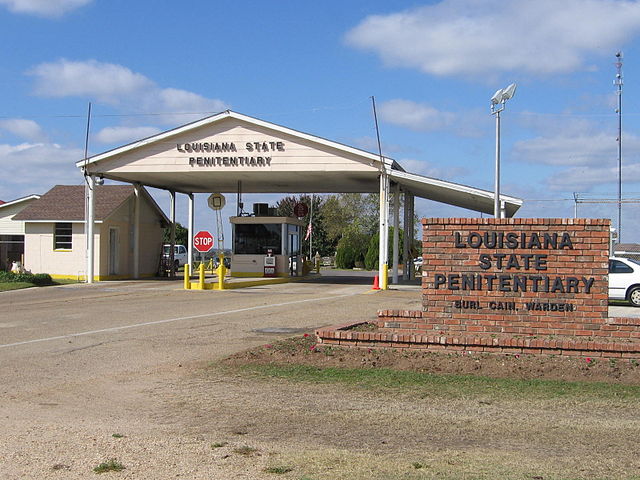
Louisiana entered the forefront of the Trump administration’s deportation efforts in August with the construction of a new immigration detention center in the Louisiana State Penitentiary, otherwise known as Angola prison. The facility nicknamed “Louisiana Lockup” now houses 51 detainees and can hold up to 416 at maximum capacity.
The facility is one of several new detention centers around the country, including the South Florida Detention Facility, better known as “Alligator Alcatraz.”
Angola is one of Louisiana’s most infamous prisons, with a history of human rights abuses and poor conditions.
New Orleans immigration attorney Sophie Woodruff has visited Angola to meet with clients on multiple occasions. “I still have a staph infection from visiting my clients there. That’s how bad the cleanliness of the place is,” Woodruff said.
The site where undocumented immigrants are being held, known as “Camp J,” was previously used for solitary confinement and was closed in 2018 due to concerns about structural safety. The site was renovated last month and is now in operational condition according to those familiar with the project.
“The system is being set up right now where the government is wanting to make it so terrible in these detention centers that people will decide to take deportation flights, what the government is calling self-deportation,” Jana Lipman, chair of Tulane University’s history department and scholar of U.S. immigration detention history, said.
The facility was chosen in part because of its formidable reputation and landscape. “This facility is designed to hold the worst of the worst,” Louisiana Gov. Jeff Landry said during a press conference last Wednesday.
The U.S. Department of Homeland Security released the names and criminal histories of the prison’s 51 current undocumented detainees last week. DHS reported that of the current detainees, 26 had previously been convicted of murder and 25 of sexual assault.
But many are concerned that this facility will soon follow in the footsteps of Florida’s “Alligator Alcatraz” detention center, in which only a third of all detainees have prior criminal histories.
Louisiana immigration attorney Homero López speculated that undocumented individuals without criminal histories will be detained in the center.
“They’ll open up a place, they’ll say, we’re going after the worst of the worst. They arrest a group, they highlight that group, and then people stop talking about it, and you move on to the next news cycle.” López said. “There aren’t enough people who are immigrants with that type of criminal background that they’re talking about.”
“Large numbers of people are being detained and held and they do not have rights to legal representation, and increasingly, their due process rights are, I would argue, being violated,” Lipman said.
According to López, it is challenging for Louisiana detainees to access pro bono representation — or any representation at all. “In Louisiana, there’s a very small number of immigration practitioners to start off with, and then for detained folks who are located in very rural areas that a lot of attorneys don’t want to go,” López said.
Louisiana is not new to immigration detention: it is one of three states in what researchers at Syracuse University are calling “Detention Center Ally,” which holds 56% of the country’s immigrant detainees. Despite immigrants only making up 4.6% of the state’s population, Louisiana has the second largest number of immigrant detainees in the country.
“[Louisiana has] an enormous population of folks who are willing to take whatever job. They don’t care about the human cost, they want a paycheck, and you’ve got a lot of prisons that were built that are empty. So what does that mean? That means you’ve got to fill those beds and you’re going to make some jobs,” Woodruff said.
Throughout the country, state authorities are building new facilities to house federal immigration detainees.
“In Florida, you have alligator Alcatraz, in Nebraska, you have the Cornhusker Clink, in Indiana, you have the Speedway Slammer … we have the Louisiana Lockup, because Louisiana locks people up,” López said.