


Millions of Americans could lose healthcare because of The One Big Beautiful Bill Act. The act, which passed on July 4, cuts funding for Medicaid and introduces more strenuous work requirements to access benefits.
The cuts to Medicaid, a government program that provides free or low-cost health care to low-income Americans, threaten Louisiana residents more than most, with 30.2% of Louisiana residents under Medicaid coverage. The national average is 20.5%.
The cuts are part of a push by Republicans for reduced government spending. Supporters of the OBBB argue that the bill will lead to “tremendous” economic growth.
“The reason we call it the Big Beautiful bill is because it is a tremendous pro-growth package … that is going to make everyone’s incomes go up,” House Speaker Mike Johnson of Louisiana said in an interview with NBC News. “I am telling you, this is going to reduce the deficit.”
“There are no Medicaid cuts in the big beautiful bill,” Johnson said. “This [work requirements] is minor enforcement of this policy.”
However, a report by the Kaiser Family Foundation estimates a 20% reduction in Medicaid spending in the state of Louisiana over the next 10-year period — the highest proportion in the nation. Around 10.9 million people could lose Medicaid coverage in the U.S. because of the OBBB.
“Generally, giving people health insurance results in positive outcomes, both for health and for the financial impact on individuals and hospitals,” said Kevin Callison, an associate professor at the Celia Scott Weatherhead School of Public Health and Tropical Medicine. “We found that medical debt went down when people gained health insurance … uncompensated care fell dramatically for hospitals.”
A major problem for Medicaid recipients will be new work requirements. Around two-thirds of individuals receiving Medicaid benefits are actively working and meet the new employment requirements.
“What you don’t want to see is people that need healthcare not get it,” Dean of Tulane University School of Medicine Lee Hamm said.
Louisiana faces unique challenges due to its skewed economy and the prevalence of chronic health conditions. Hospitals linked to Tulane play an especially large role in providing healthcare to Louisiana residents.
“Academic medical centers and medical schools … take care of a disproportionate amount of underinsured or uninsured,” Hamm said.
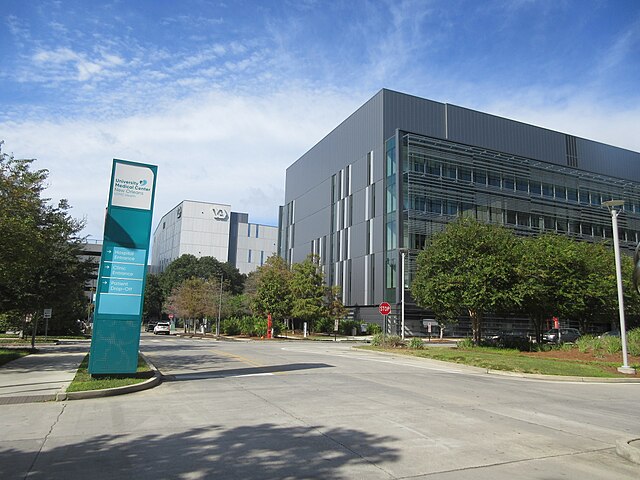
Tulane is affiliated with several hospitals throughout the New Orleans area, including University Medical Center, Manning Family Children’s and East Jefferson Medical Center.
“We, of course, do worry about access to health care, not just for our students, but for our patients, and so, in both, we feel an obligation to try to deliver care,” Hamm said.
“These things have become sort of very much political issues, impinging on health care,” Hamm said. “As this is studied and debated, which it will be both locally and nationally, I doubt that it is a finished issue.”
Tulane’s Health Center for Student Care is not a Medicaid provider. However, it provides healthcare visits to Louisiana Medicaid recipients at both the Uptown and Downtown locations. The number of Tulane students receiving Medicaid benefits is not publicly disclosed.
Rural hospitals across the country have already begun to close their doors or draw down less profitable services, such as obstetrics and gynecology units. Johnson denied that the cuts will hurt rural hospitals.
In June, a group of Louisiana healthcare leaders sent a letter to Congress expressing concern about the effects on rural communities in Louisiana.
Tulane, as a premier public health school in the Deep South, plays an especially important role in terms of tracking the effects of the OBBB. “I can say, in terms of generating that information and evaluating these policies, that’s where the university really does play a critical role,” Callison said.
Editors note: An earlier version of this story stated that Tulane’s Health Center for Student Care was a Medicaid provider. Since publishing, Tulane updated its Health Center website to clarify it is not a Medicaid Provider. However, the Health Center does provide visits to Medicaid recipients.