


The framers of the U.S. Constitution granted anyone in the United States certain unalienable rights in the Declaration of Independence. Of these 10 amendments in the Bill of Rights, the fourth has been in the news recently.
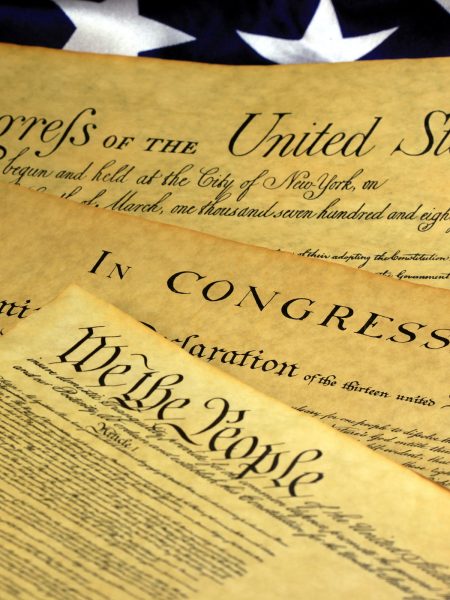
The Fourth Amendment states, “The right of the people to be secure in their persons, houses, papers, and effects, against unreasonable searches and seizures, shall not be violated, and no Warrants shall issue, but upon probable cause.”
In essence, the only way for authorities to search your belongings is if they have a valid enough reason to.
However, in the 1968 U.S. Supreme Court Case Terry v. Ohio, the court allowed for police officers to make “Terry stops” — a brief stop and frisk if the officer has reasonable suspicion. This stipulation, combined with the 1967 decision Pierson v. Ray, which gave the police qualified immunity, set the stage for the Supreme Court’s recent controversial decision.
In July, a lower court issued a temporary order that Immigration and Customs Enforcement could not detain individuals based on their apparent race or ethnicity, for speaking Spanish, their presence at a certain location or their type of work.
In September, the Supreme Court struck down down this injection, allowing the ICE profiling to resume.
The Supreme Court’s denial is an endorsement of racial profiling in the guise of “common sense,” as Associate Justice Brett Kavanaugh explained it. His framing ignores the lived reality that “reasonable suspicion” has never been applied evenly to communities of color. To pretend otherwise is to close one’s eyes to history.
“In Brignoni-Ponce … the Court held that ‘Mexican ancestry,’ alone did not constitute reasonable suspicion to support stops by Border Patrol agents, even near the border, because ‘large numbers of native-born and naturalized citizens have the physical characteristics identified with ‘Mexican ancestry,’” Associate Justice Sonia Sotomayor wrote in her dissent.
Sotomayor is stating an obvious fact: There are too many Americans that speak Spanish or have an accent for those factors to be used as a reason to detain someone.
Sotomayor reminded the court of their own precedent in Brignoni-Ponce, but as we have seen in Dobbs v. Jackson Women’s Health Organization, precedent clearly matters less to this court than ideology. But this is dangerous. When the court puts politics ahead of constitutional protections, it weakens the very foundation of the Bill of Rights.
“The Supreme Court’s order means that ordinary aspects of our daily lives, where we work, the language we speak, or the communities we live in can be a basis for detention and questioning,” the Immigrant Legal Resource Center explained in a press release after the ruling.
“Terry Stops” and the immunities granted in Pierson led to this dangerous precedent. Small legal allowances, once thought to be limited, can expand into broad tools of discrimination when paired with a court willing to reinterpret precedent for political ends.
This Trump-era Supreme Court is systematically dismantling generations of civil rights safeguards. The court’s record speaks for itself: expanding police power, tightening constraints on rights, and making it more difficult for ordinary citizens, especially minorities, to live without fear of harassment.
Enough is enough. If the court won’t enforce our most basic constitutional liberties, then it is time for citizens, activists and legislators to shriek for change. The Bill of Rights was not written to comfort the powerful; it was written to safeguard the powerless.