


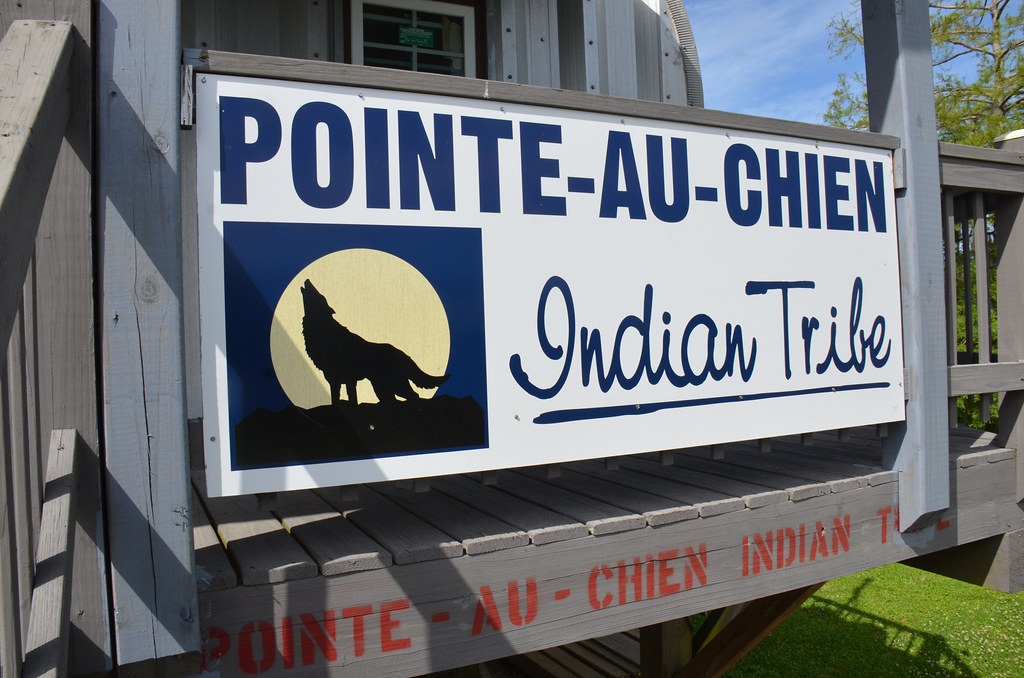
Tulane University students are working with the Louisiana Pointe-au-Chien people via enrollment in a service learning course highlighting the study of local Native American tribes.
The Point-au-Chen Indian Tribe became recognized by the state of Louisiana in 2004 but did not receive federal recognition by the Bureau of Indian Affairs, after petitioning in 1996.
Dr. Laura Kelley is a professor at Tulane and teaches the freshmen colloquium and service learning class, Indian Tribes on the Bayou. She has been working with the Pointe-Au-Chien Indian Tribe since Hurricane Katrina, when service learning became mandatory at Tulane.
“Students have been working with the tribe for nearly 20 years now, and each year we’re doing something different,” Kelley said.
Each year the students are tasked with a different activity geared towards accurately tracking the tribe’s insufficiently-documented history through primary sources, as they petition for federally recognized autonomy.
“It’s very hard to protect our land without this recognition,” Arizona State University Dean for Inclusive Excellence and member of the Pointe-au-Chien Indian tribe, Patty Ferguson-Bohnee, said during a guest lecture.
Students also had the opportunity to work with the tribe by “collecting recipes from the elders… [and] writing a children’s book for the tribe,” Kelley said.
The Pointe-au-Chien speak a dialect derived from French, known as Indian French. It is taught at the local French-immersion elementary school École Pointe-au-Chien, which was not sanctioned until 2023.
In 2022 when Hurricane Ida decimated Pointe-au-Chien, Tulane’s Center for Public Service was among the first to volunteer in the effort to help clear and rebuild. The tribe resides locally, in the southern part of New Orleans’ Terryborne and Lafourche parishes.
This region contains one of the fastest eroding land masses in the world, losing about 25-35 square miles a year due to hurricanes, subsidence and sea level rise. This loss of land threatens their cultural sites, homes and businesses.
With federal recognition the tribe would directly receive aid and be able to make autonomous decisions when facing environmental disasters. Federal recognition “is basically a relationship that’s been reaffirmed or confirmed by the federal government, that you have a nation to nation relationship between the tribe and the United States government,” Ferguson-Bohnee said.
Federal recognition also allows the tribe to be in control of the projects that take place on their land. Without this freedom, an oil and gas company had the authority to develop on Point-au-Chien land with plans to cut through a cemetery.
In the 1930s, as well, oil and gas reserves were a point of contention between the government and Native Americans. The government “came in and were exploring and just cutting up land really haphazardly… which makes the community very vulnerable,” Ferguson-Bohnee said.
The tribe is descended from multiple tribes in Louisiana and the Mississippi River Valley such as the Atakapas, the Tunica-Biloxi and the Acolapissa. There have been indigenous inhabitants in this area for thousands of years.
Ferguson-Bohnee successfully assisted four Louisiana tribes in obtaining state recognition. She said she has testified before the Louisiana State Legislature, the U.S. Senate Committee on Indian Affairs and the Supreme Court regarding tribal recognition.
The establishment of a tribe’s inherent right to self-governance and entitlement to federal services requires a seven-step process, demonstrating a tribal system of governance and its longstanding establishment.
One of the first Native tribes to gain federal recognition under the 1978 Federal Acknowledgement Process (FAP) was the Tunica-Biloxi Indian Tribe in Louisiana.
“One of the big issues for the tribes in Louisiana is that there’s not a lot of good research that has been done on primary documents,” Ferguson-Bohnee said in an interview for the PBS documentary The Precipice.
Tulane students have the opportunity to work towards validating available tribal documentation in the service learning course Indian Tribes on the Bayou.