


Revelers can expect fewer throws this Mardi Gras season as steep tariffs on Chinese imports drive up costs for krewes. Combined with ongoing sustainability efforts, the changes could reshape Carnival this year.
Tariffs on Chinese goods reached as high as about 145% last summer, during peak Mardi Gras purchasing season, forcing some of the city’s largest krewes to scale back their throws. However, smaller krewes and environmental groups say the shift presents an opportunity to reduce waste and rethink long-standing parade traditions.
Wholesalers face challenges
Paul Myers, general manager of Beads by the Dozen, said the biggest challenge was not the rising tariffs — it was the way they were implemented.
“We were unable to provide concrete pricing to our customers until late in the year, as the tariff rates were not “locked-in” until November. This made it very difficult to work with Carnival organizations and other customers who need firm pricing to budget for their parades and other events,” Myers said.
Krewes usually purchase throws in bulk through wholesalers and then sell them to individual riders. With prices finalized later than usual and overall costs rising, some krewes worry riders may opt out, leading to fewer throws and, in some cases, shorter parades.
Eco-friendly throws
According to Brett Davis, the founding director of local nonprofit Grounds Krewe, parades can produce as much as 2.6 million pounds of street trash in just 10 days.
Davis launched the organization in 2019 to address parade-related waste. The group now works with Tulane University students and local advocates to promote eco-friendly, functional throws sourced from American and Louisiana businesses.
“So, a lot of what we do is consumable items, things like jambalaya mix, so sourced from a local company called Jambalaya Girl, Camellia red beans, PJ’s Coffee,” Davis said. “But we also have other items that are consumable, as in, like household items like soap or hand scrubs or cosmetic biodegradable glitters, bamboo toothbrushes, postcards and hand sanitizer.”
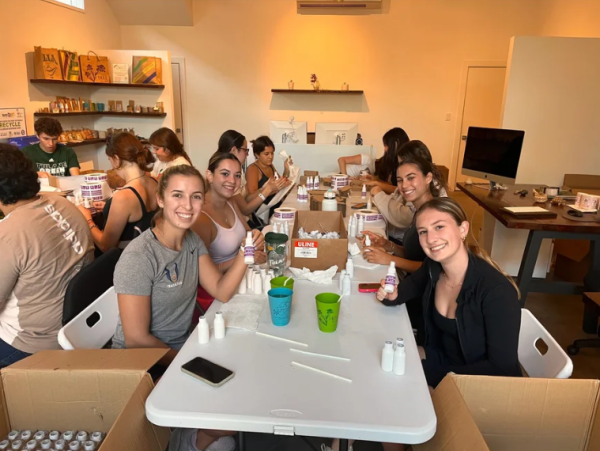
While the push for sustainable throws predates the Trump administration, Davis said recent tariff increases have accelerated interest.
“People want to throw better. They understand the environmental implications of the imported disposable plastic stuff and how it can clog up storm drains … They’re ending up all over the ground and in the trees, and leaching chemicals and microplastics,” Davis said.
Amy Kirk-Duvoisin, the founder of the Joan of Arc Project, banned plastic beads from the Joan of Arc parade since its inception in 2009.
“It’s definitely a performance art parade … Our focus is absolutely on street theatre, not to just give out gobs of things, and we make a point about handing things out, not throwing things,” Kirk-Duvoisin said.
“People going to parades are becoming really, really worn out with the excess of … high quantity, low quality, imported disposable plastic items,” Davis said. “I would say you’re going to see fewer beads, more imported ‘functional items from China’, and then more locally sourced throws.”