


More than half of Louisiana adults have experienced sexual or physical violence at some point in their lives, according to the 2025 Louisiana Study on Violence Experiences Across the Lifespan conducted by Tulane University’s Newcomb Institute. The results estimate that 2 million Louisiana adults have experienced physical violence, and 1.5 million have experienced sexual violence in their lifetimes.
The survey was conducted in the summer of 2025 and received more than 1,000 responses from Louisiana residents aged 18 and older. According to the Newcomb Institute, the 2025 results show a slight decrease in overall violence compared to the 2023 report. Men experienced a 7.3% decline in physical violence from the 2023 data, while they found no significant change for women.
Sexual violence decreased 6.1% for both men and women since 2023. Among women, sexual violence decreased most notably in forms of verbal and cyber harassment.
Anita Raj, executive director of the Newcomb Institute and lead researcher on the study, said that violence is a health concern for all Louisianans.
“Violence is both a health and an economic crisis for Louisiana,” Raj said. “We are seeing reductions in sexual and physical violence since 2023, but the scale of harm remains staggering. Violence is not only a personal tragedy; it’s a public problem that affects our families, workforce and communities. We cannot improve health and safety in our state without addressing the ubiquity of violence.”

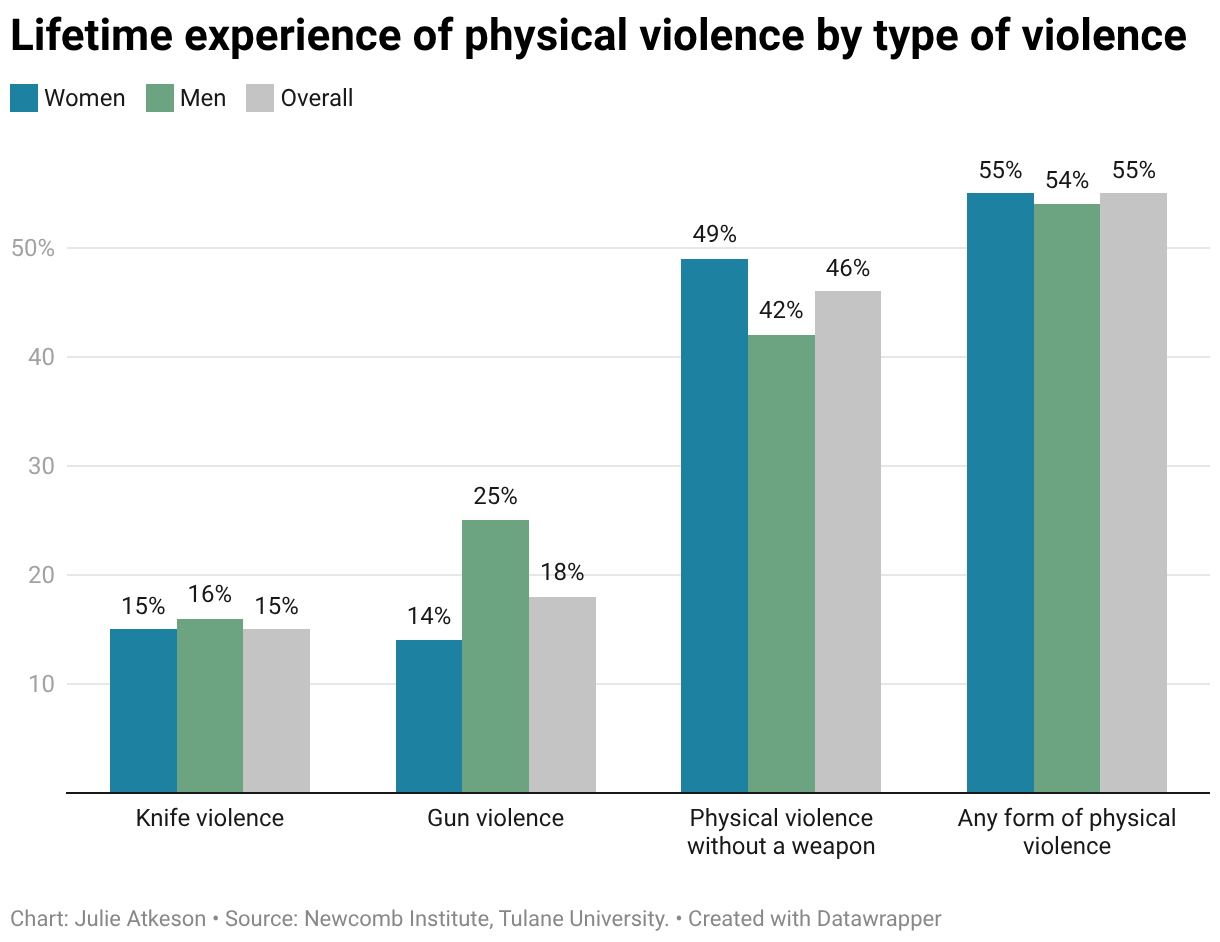
One in four Louisianans has experienced weapon-related violence, with men about 41% more likely to experience it than women. More than half of all Louisiana residents, almost 2 million people, have experienced physical violence in their lifetime.
59% of women who experienced physical violence in the past year reported a spouse or partner as the perpetrator, compared to 14% of men. At 53%, strangers were the most common perpetrators against men.
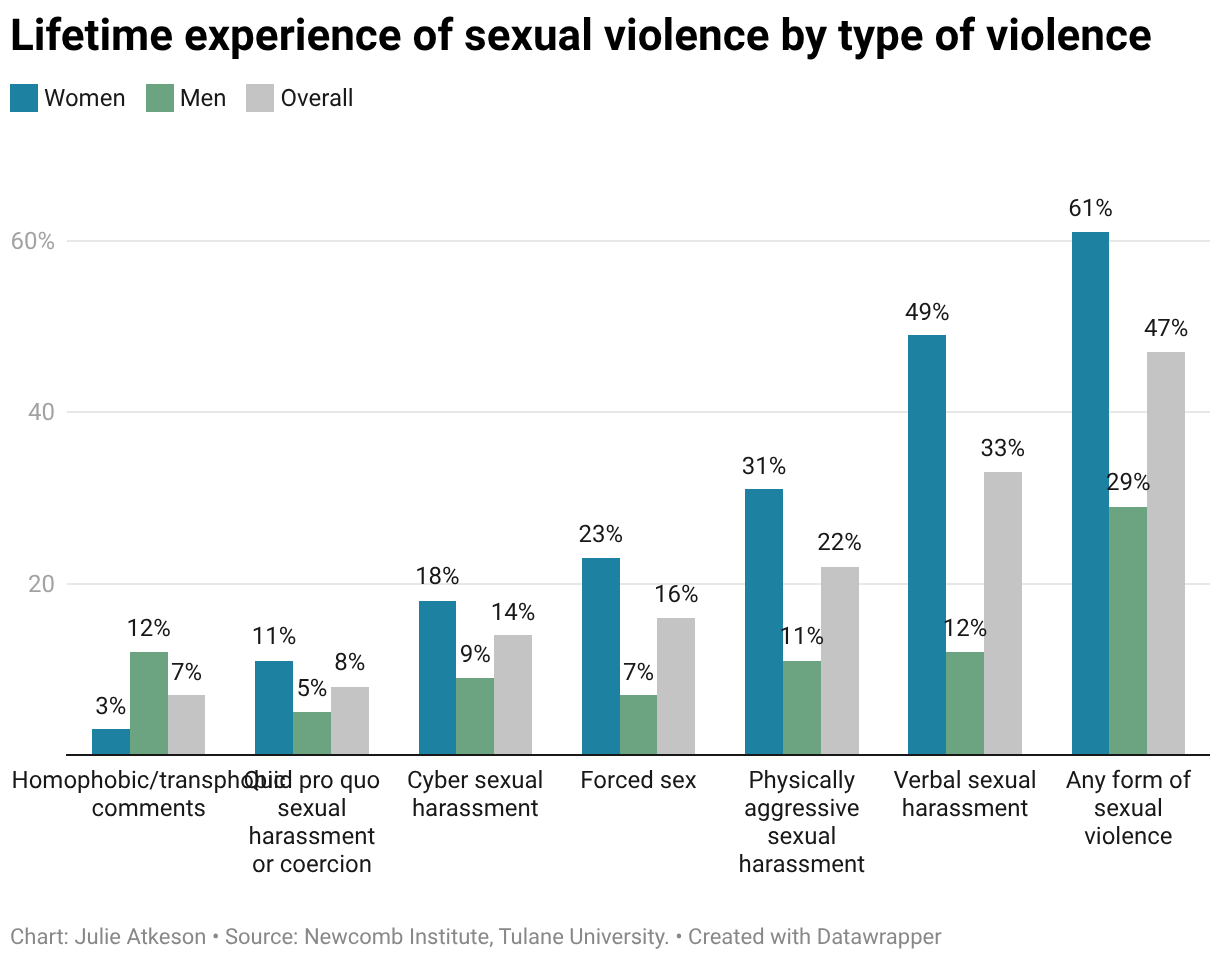
Over 1 million Louisiana women and half a million Louisiana men have experienced sexual violence. Except for homophobic and transphobic comments, women reported higher rates of sexual violence in all categories. 49% of female respondents experienced verbal sexual harassment, and 31% experienced physically aggressive sexual harassment.

Among individuals who experienced sexual violence in the past year, strangers were the most frequently reported perpetrators for both genders, accounting for 73% of cases among women and 64% among men.
The survey also examined common locations and consequences of both sexual and physical violence. For both men and women, home and public spaces were the most frequently reported locations where violence occurred. Approximately half of the women who experienced violence, either physical or sexual, reported anxiety or depression as a result