


New research published by a group of researchers at the Tulane University School of Medicine suggests that untreated syphilis significantly raises the risk of serious heart and blood vessel problems.
Syphilis is a sexually transmitted infection that is becoming increasingly prevalent nationwide and in southern cities like New Orleans. In the U.S., total syphilis cases have jumped more than 80% between 2018 and 2023, while New Orleans saw a 36% increase in all cases from 2020 to 2021, according to the Centers for Disease Control and Prevention.
The Tulane researchers used data from three New Orleans hospitals and retrospectively compared the cardiovascular health of nearly 1,500 people with syphilis against 7,345 people without it over a 15-year period beginning in 2011.
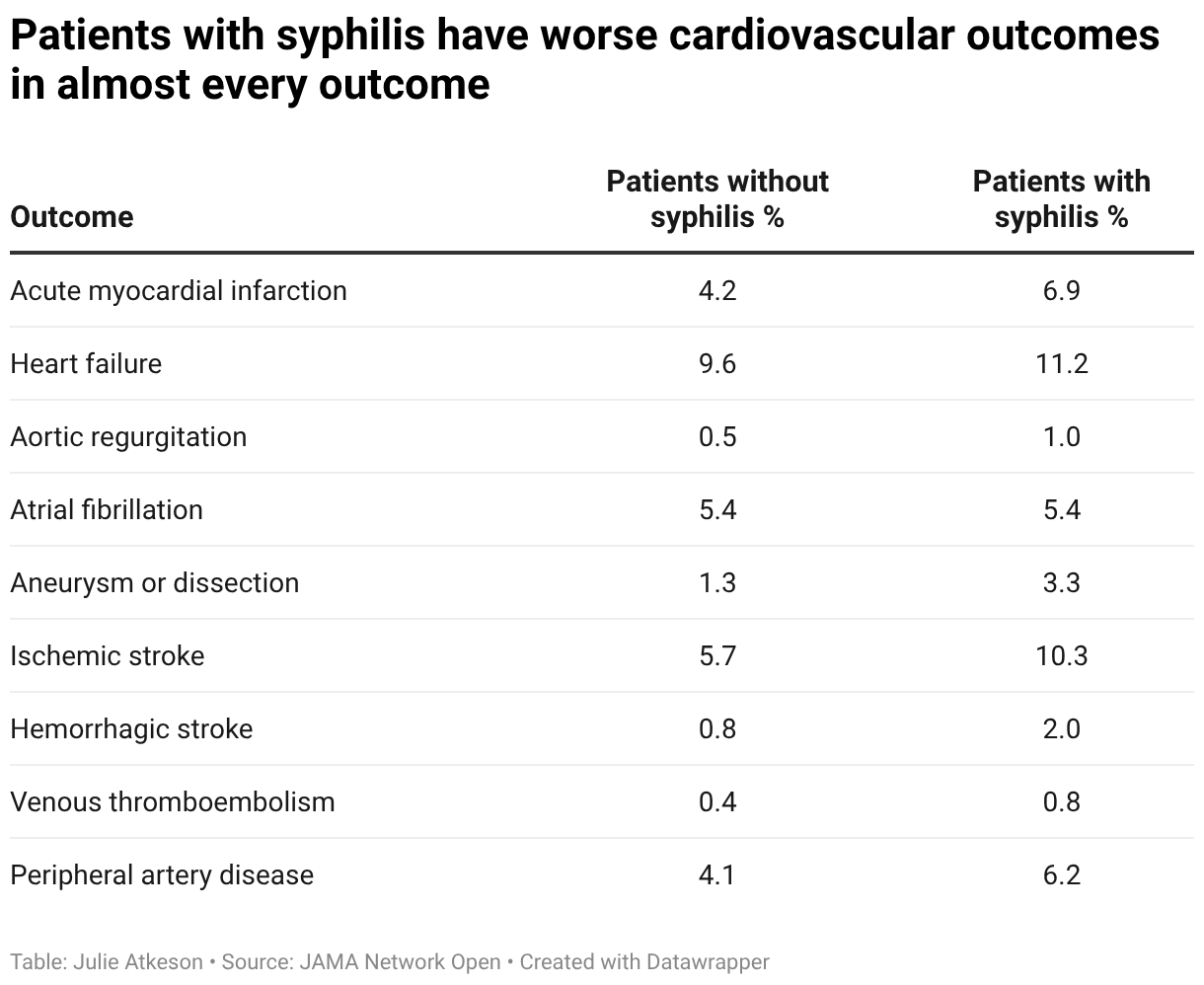
The results found that people with syphilis faced significantly higher risks of cardiovascular complications.
Eli Tsakiris, a fourth-year medical student and the lead researcher for the study, said the team was partly motivated by how outdated existing data on syphilis was.
He referred to the Tuskegee experiment, a deeply unethical trial that took place in Alabama from 1932 to 1972 in which Black men were intentionally denied treatment for syphilis to observe the disease’s progression, despite penicillin becoming a recommended treatment for syphilis about 15 years into the study.
Tsakiris said that for decades, the study has been one of the primary sources physicians have relied on for information about syphilis progression.
“We actually had almost no new data [since the Tuskegee study] 100 years ago,” Tsakiris said.
“It was really interesting to redo this and in more of a modern setting.”
Dr. Amitabh Pandey, director of cardiovascular translational research at the Tulane School of Medicine, said in a press release that syphilis can increase systemic inflammation, a key driver behind the cardiovascular risks seen in the study.
The study found that across almost every category tested in the study, patients with syphilis experienced worse outcomes.
People with syphilis had twice the risk of an aortic aneurysm, a potentially life-threatening bulge in the body’s main artery. They also faced a 92% higher risk of hemorrhagic stroke, a 53% higher risk of ischemic stroke, a 31% higher risk of heart attack and a 28% higher risk of peripheral artery disease, a condition that reduces blood flow to the limbs.
Tsakiris noted that tracking whether patients in the study had actually been treated was difficult, as some individuals receive treatment at local community health centers outside of the hospital system’s records.
“We can only draw an association between the documentation of the infection and then what happens down the line,” Tsakiris said.
While the study was observational, the associations were strong enough that the team believes they deserve more serious clinical attention.
“I would be very satisfied if this work succeeds in returning syphilis to the consciousness of clinical consideration,” Tsakiris said. “Unfortunately, syphilis is back, and its diagnosis may have cardiovascular implications.”
Eric F. O'Neill • Apr 30, 2026 at 10:49 am
This has been common knowledge for hundreds of years. Wasted research funds.