


Next time you are ordering oysters at a restaurant, ask the waiter where the shells will go; there’s a chance that they’ll end up on the shores of coastal Louisiana, thanks in part to Dorothy Jelagat Cheruiyot, senior professor of practice in the Department of Ecology and Evolutionary Biology at Tulane University.
Cheruiyot was awarded a Coastal Stewardship Award from The Coalition to Restore Coastal Louisiana for her work protecting and restoring Louisiana’s coast. Cheruiyot’s collaboration with the CRCL has led hundreds of students to participate in bagging and placing oyster shells along the coastline, creating a barrier to protect against the constant battering of waves that contribute to erosion.
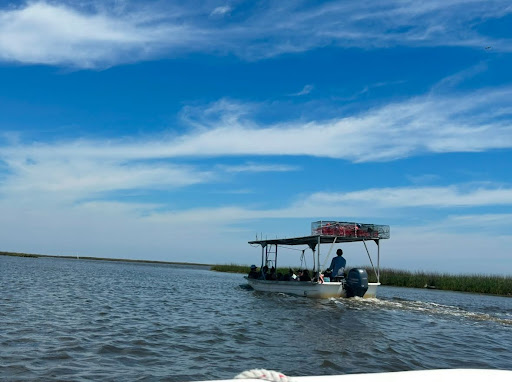
Cheruiyot led an initiative to use these shell bags to protect the burial grounds of the Pointe-au-Chien Indian Tribe, who are still fighting for federal recognition.
“I’ve partnered with them [the Pointe-au-Chien] since 2018 when I arrived here, and so every semester, we coordinate together, and the partnership has grown a lot,” Cheruiyot said.
Across Pointe-au-Chien land, erosion leads to saltwater intrusion, causing freshwater vegetation to die off. This creates a chain reaction that affects much of the seafood that forms the basis of their diet. During a tour by one of the tribal members, the evidence of recent environmental damage was shocking.
“We saw dolphins in the bayou, meaning that … the water in the bayou is no longer fresh,” Cheruiyot said. Dolphins live in saltwater, not freshwater bodies.
Further inland, the community garden in Pointe-au-Chien is maintained with the help of the students. It is one of many community gardens that Cheruiyot brings students to, ensuring that communities have access to the traditional foods in their diets.
In other gardens, students collaborate with organizations such as the Mardi Gras Indian Council. Students first meet with local communities to learn about their preferred diets, then plant those crops in the community gardens for the neighborhood. Cheruiyot said the average harvest from a garden is about 15 to 20 grocery-store-sized paper bags of food.
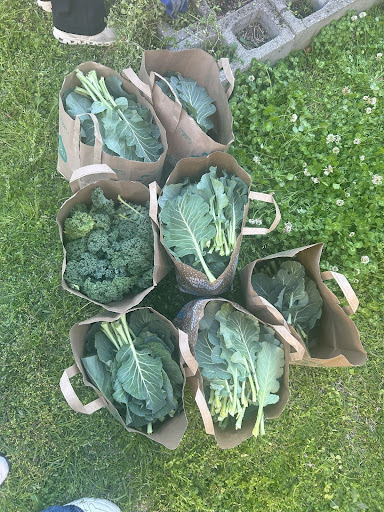
During harvests, community members can visit the garden and pick out the produce that they want to take home, giving them what Cheruiyot called food sovereignty. Providing a community food distribution service has filled a need within the community, especially one that lowers the carbon footprint and sustainably provides produce.
Rain gardens are another highlight of Cheruiyot’s initiatives. The professor brings students to volunteer at several rain gardens that channel water to bioswales — planted depressions that hold runoff — to avoid flooding during heavy rains.
Despite the manual labor, students said they found the volunteering opportunities enlightening and rewarding. Cheruiyot’s “passion and dedication for conservation and sustainability extends outside of the classroom and throughout her community. She cares deeply and makes her students feel seen in a way that creates a lasting impact on the way we see the world,” senior Marina Chander, who has taken three classes with Cheruiyot, said.
For Cheruiyot, the community relationships are at the heart of her work. Many volunteers, she said, even participate without earning any credit hours.
“It’s different from volunteerism, because volunteerism, you go and you do something … but community engagement, you build friendships, you build relationships and … there’s just such a reward that it’s hard to put in something tangible,” Cheruiyot said.