


Local Democratic legislators and activists sharply criticized the federal immigration operation in New Orleans, “Catahoula Crunch,” amid an upswell of protests nationwide and locally against U.S. Immigration and Customs Enforcement and U.S. Customs and Border Protection operations and the fatal shootings of two protesters in Minneapolis.
At a shadow hearing with Reps. Troy Carter and Bennie Thompson on Monday, Mayor Helena Moreno said the operation has targeted and profiled Hispanic individuals, causing “widespread fear” in the city.
“What we saw here and now in a much more severe fashion in the city of Minneapolis is no longer an issue of immigration, public safety or even politics. This is a cruel, divisive agenda lacking humanity,” Moreno said. “Overwhelmingly, the people of America question what these ICE agents are even doing, except for creating chaos, ignoring the Constitution and costing lives.”
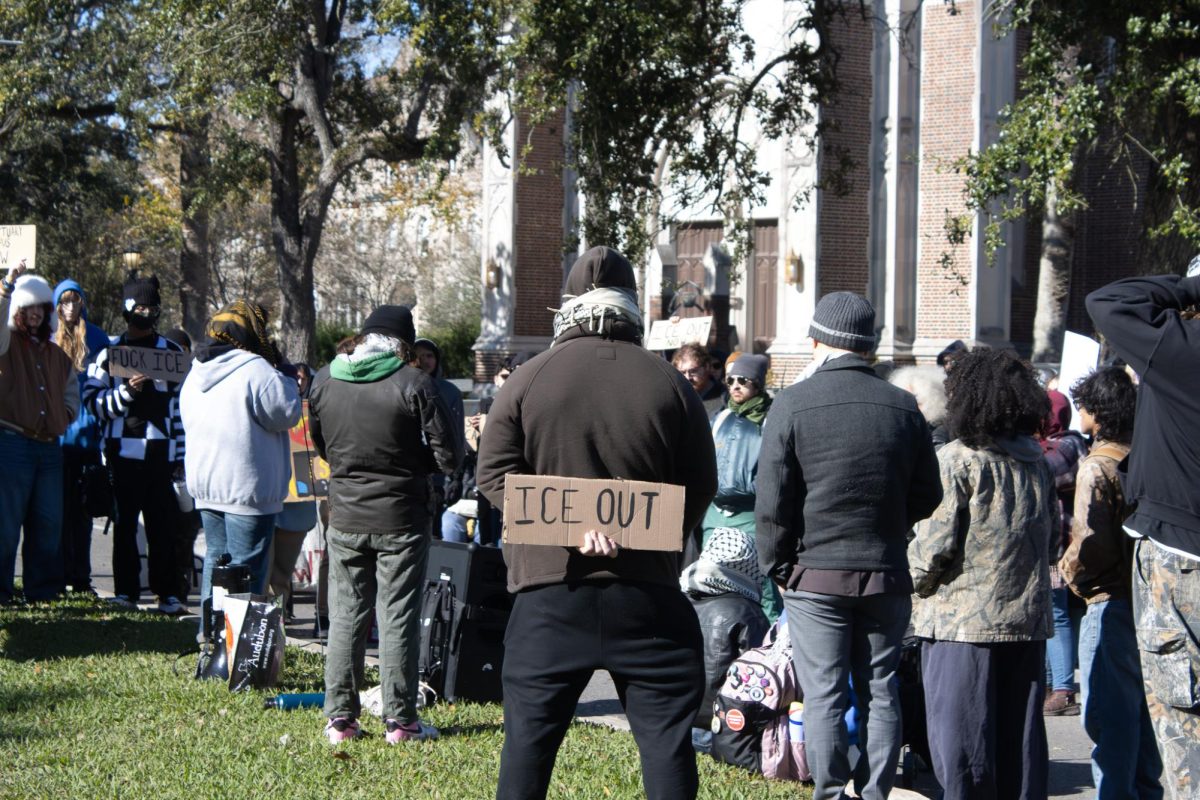
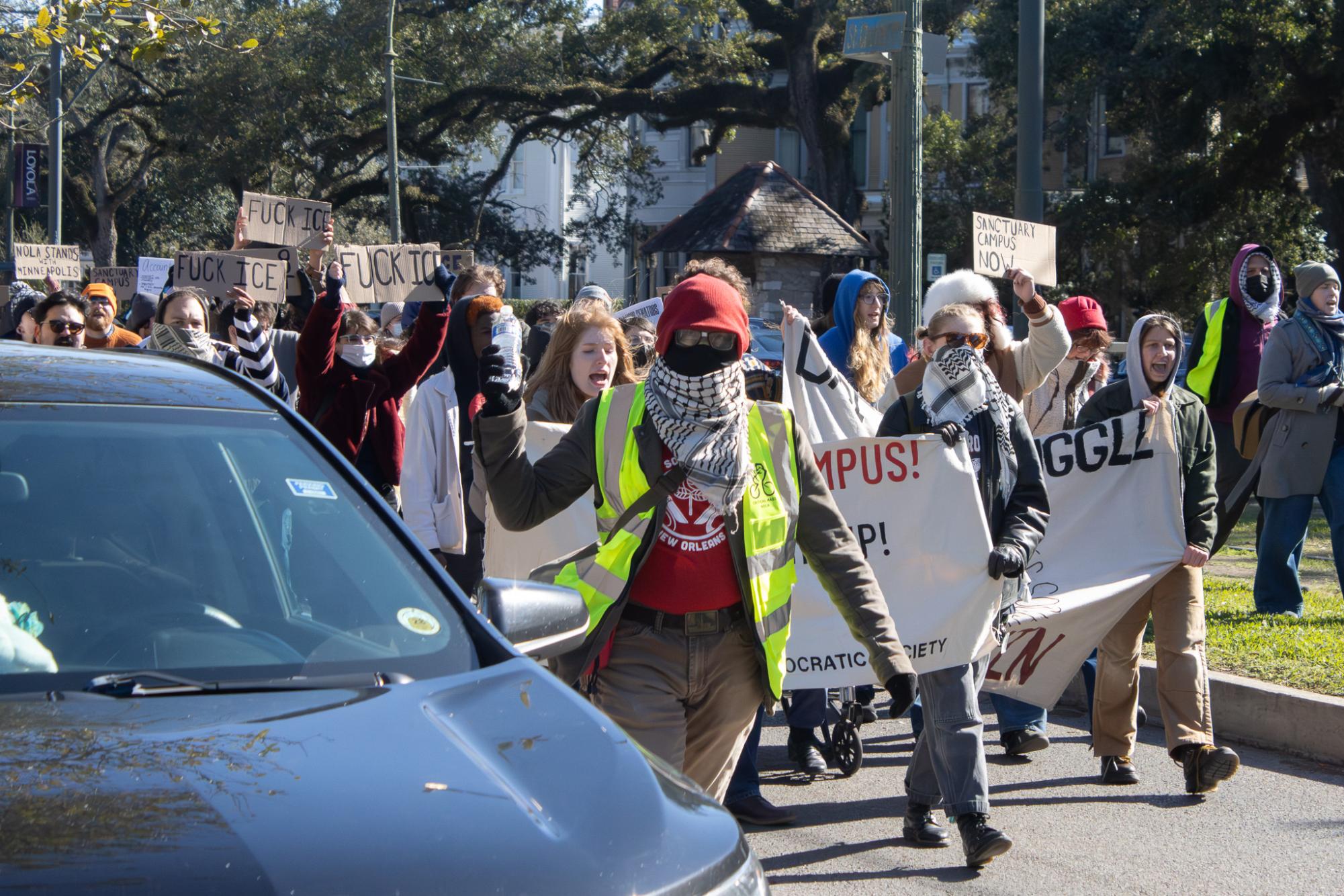
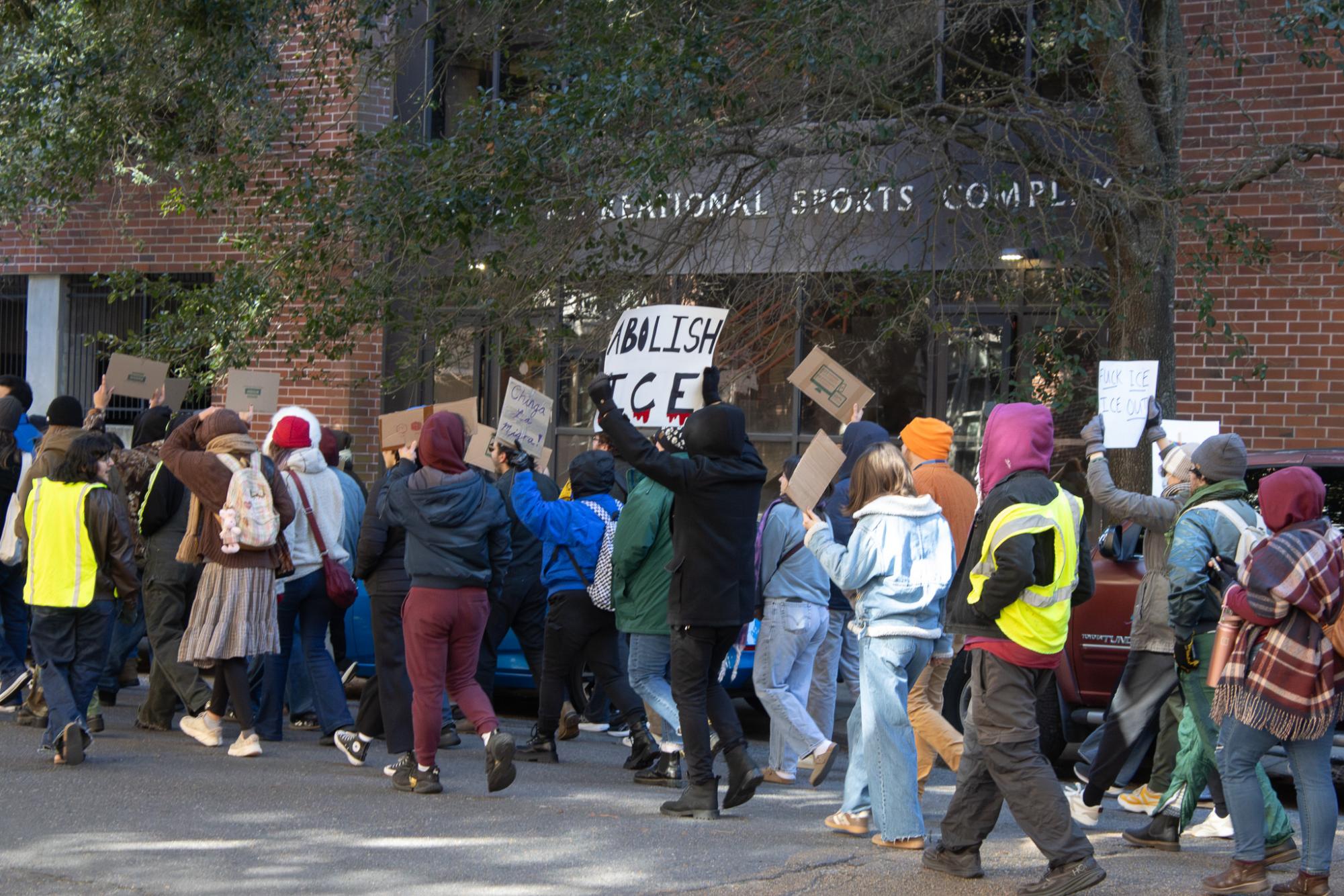
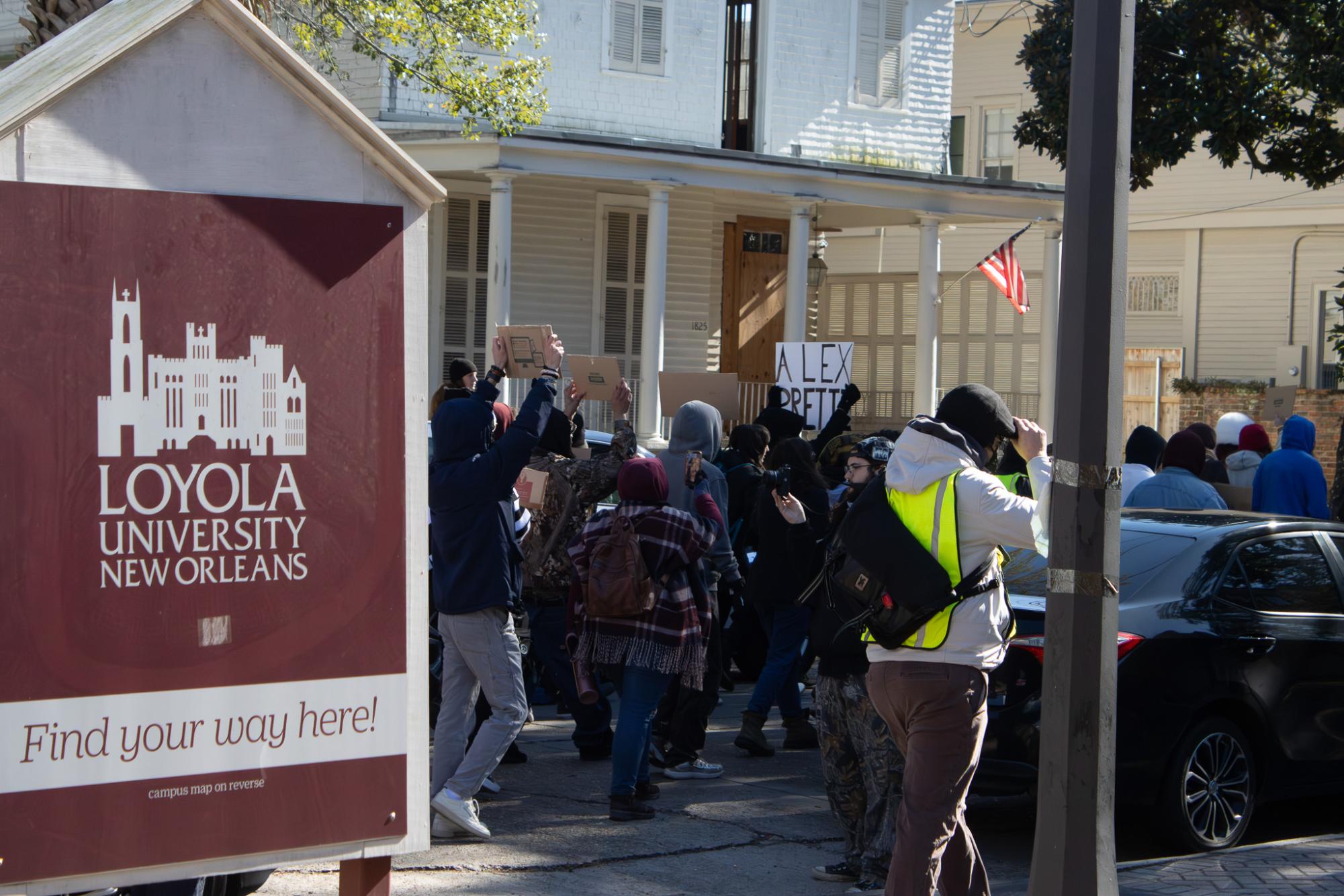
A group of around 60 protesters gathered on Freret Street by Tulane University’s campus on Monday to protest the immigration operations before marching to St. Charles Avenue. The protesters, who appeared to be a mix of Tulane students, Loyola University New Orleans students and community members, called for justice for individuals killed by immigration agents.
“We’re calling for justice for Alex Pretti, justice for Renee Good, justice for Keith Porter Jr., and all the victims of racial terror,” Loyola law student Mae Guidry said. “We’re demanding a sanctuary campus policy at both Tulane and Loyola University.”
-
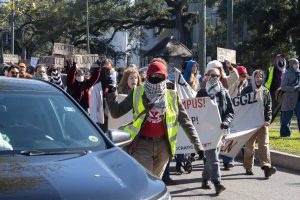
Anti-ICE protestors block St Charles Avenue
-
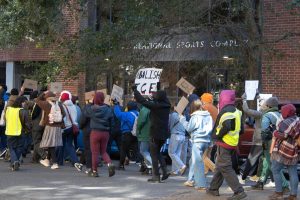
Protestors march down Freret Street
-
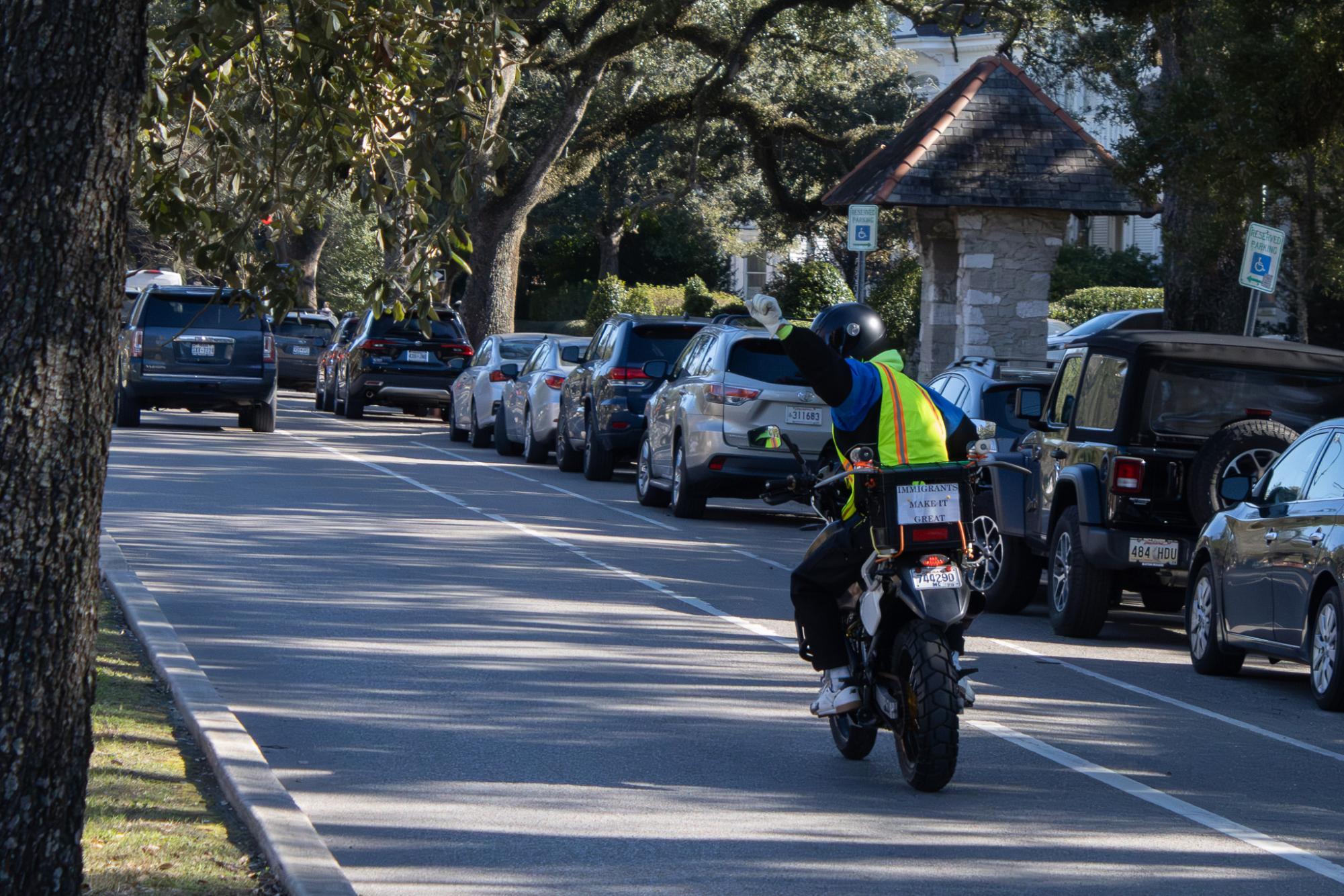
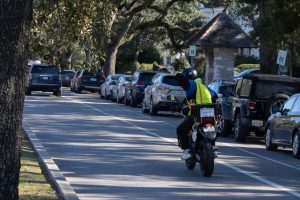
A motorcyclist gestures in support of anti-ICE protestors
-
Protesters demonstrate against federal immigration enforcement
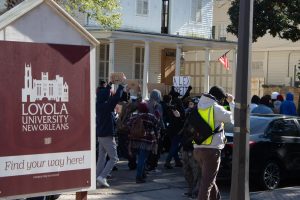
Sanctuary campuses limit cooperation with federal immigration enforcement and take extra measures to protect undocumented students. A few colleges adopted the designation during President Donald Trump’s first term, while other schools indicated their support for undocumented students without taking on the label to avoid attracting unwanted federal scrutiny.
There have been no confirmed reports of immigration enforcement officers on Tulane’s campus. Tulane does accept undocumented students, but the exact number enrolled is not reported. The Higher Ed Immigration Portal estimates approximately 1.3% of students enrolled in higher education in Louisiana are undocumented students.
Tulane spokesperson Mike Strecker said the school provides resources to immigrant and international community members through Center for Global Education, the Office of International Students & Scholars and Tulane’s Immigrants’ Rights Clinic, among other programs.
Federal agents need permission from campus officials or a signed judicial warrant to enter non-public areas of campus, such as residence halls and offices. However, local police — including the Tulane University Police Department — are required to “fully cooperate” with immigration authorities under Louisiana law.
Even if Tulane were to adopt the sanctuary campus designation, it would still be required to comply with federal immigration operations by honoring judicial warrants and subpoenas of student records. While the Trump administration repealed a Biden-era policy that protected schools from immigration operations early last year, the department still has an internal policy — not an official mandate — to avoid operations on campuses.
“Catahoula Crunch” appears to be winding down now as officers leave for Minneapolis, according to documents obtained by the Associated Press. The U.S. Department of Homeland Security did not confirm whether federal agents would return to the city.
As of Jan. 9, federal agents had detained at least 560 individuals in the New Orleans operation, according to DHS Assistant Secretary for Public Affairs Tricia McLaughlin. It is unclear how many of those had criminal records. Nationally, less than 30% of those in ICE detention facilities have any criminal convictions.
McLaughlin said the operation would target immigrants with serious criminal records. Republican Rep. Steve Scalise defended “Catahoula Crunch” and blamed local leadership in Minneapolis for the recent violence in the city.
“Why is ICE doing this in cities? They’re enforcing federal law,” Scalise said. “416,000 criminals have been arrested by ICE just in the last year. That has helped make our communities safer.”
“Catahoula Crunch” began in earnest in early December with the arrival of around 250 federal agents. The Trump administration targeted New Orleans for the operation because of its sanctuary policies, which prevent local officers from honoring federal detainers, which are administrative requests to hold detainees after their release date until they can be taken into federal custody for immigration enforcement.
Cameron Young contributed to the reporting of this story