

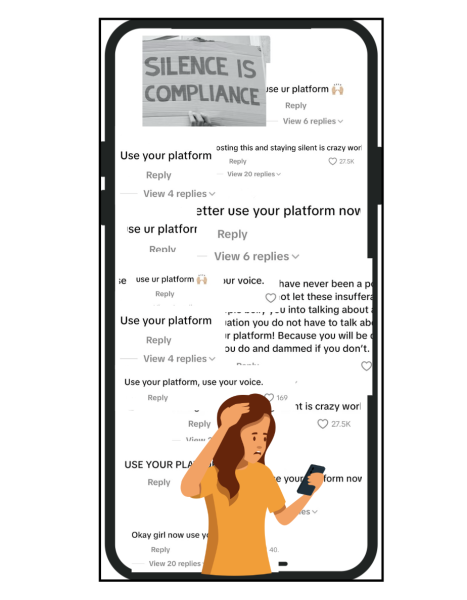
In this interconnected world, the more followers you have, the more social responsibility you have. This includes basic moral responsibility, like not promoting criminal activities or spreading dangerous misinformation on your platform. If an influencer monetizes public attention, it is reasonable for the public to expect them to fulfill their civic responsibility to educate their audience about important world events.
Social media influencers should not be pressured into instant, uninformed commentary. However, that does not mean they should be exempt from civic responsibility simply because they are not experts. Most citizens are not experts, yet they still converse and post their opinions on social media.
It does not take a Ph.D. to read and cite sources, or even just to post a list of reputable articles. It does not take a policy expert to form an opinion; everyday citizens do it all the time. Democracy rests on informed opinions, not expert ones.
Whether influencers like it or not, platforms are inherently political. A February 2025 article in the National Institutes of Health called social media companies “quasi-governmental agencies,” and said that “content moderation of social media companies is analogous to governmental interference due to the lack of reasonable alternatives.”
With this content moderation and the influence of algorithms putting political media in front of users, influencers are important beacons of information. In floods of disinformation and misinformation, a responsible influencer can use their platform to even simply say, “I am still learning.”
If those influencers instead remain silent, it reinforces the status quo and may allow disinformation to spread.
Influencer lifestyles are already very political. A fashion influencer needs to have opinions on labor practices and ethical sourcing. Fitness influencers must understand how to fight pseudoscientific conspiracies surrounding health. Humor creators need to keep up with current events if they wish to make topical jokes. Claiming that influencers should stay in their “niche” ignores the reality that those niches are entangled in social issues.
This dynamic is particularly relevant for college communities like Tulane University, where social media often shapes how students engage with local issues, especially since most Tulanians aren’t local themselves. Many students encounter civic information through online creators rather than traditional outlets. When those voices model responsible engagement, they help strengthen local democratic participation.
Although not everyone should weigh in on every topic, eliminating all expectations of responsibility goes too far. The ethical burden is not expertise, but good-faith engagement and responsible amplification.