

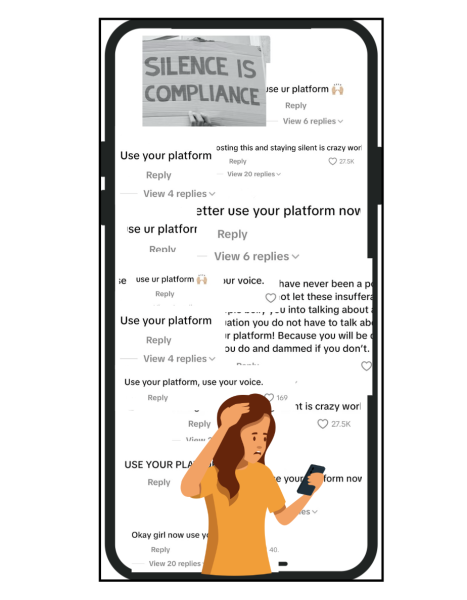
“Use your platform!” “Why haven’t you spoken out about [insert current global issue here] yet?” These are phrases you will find littered throughout the comment section of any influencer’s TikTok or Instagram post.
Somewhere in the development of the career of a social media influencer, the role changed from posting online about their niche interest or lifestyle to being expected to speak out on all current events.
If you have followers, you are expected to have a fully formed, perfectly articulated opinion on everything: politics, war, international conflicts, climate policy and more. If an influencer chooses to remain silent on a breaking news event, they are called out for complicity in the court of public opinion.
But influencers are not who we should be asking for opinions from.
Many influencers built their platforms on fashion, humor, beauty, fitness or lifestyle content. Most are not journalists, political activists or policy experts. Expecting them to suddenly become authoritative voices on complex global issues is not just unreasonable, but potentially damaging.
Influencers are pushed to post something, anything, so they aren’t accused of being complacent or ignorant. When the motivation to speak out is driven by fear instead of informed passion, they may accidentally share inaccurate information or distract listeners from more reputable sources.
There are creators who use their platforms for political activism and share information from trusted sources. Many creators speak on issues because they genuinely want to and feel passionate, but lately, it seems like the pressure in comment sections is driving unqualified influencers to lecture millions of people on a social issue they know little about.
This culture of forced commentary does more harm than good. Instead of amplifying accurate information, it adds to the wild amount of misinformation already flooding our saturated internet.
There is also a strange hypocrisy in the demand itself. Influencers are criticized for being unqualified, shallow or undeserving, until we want them to be educators and moral leaders. We can’t dismiss influencers as unserious and then insist they guide public discourse on serious issues.
Not every platform needs to be used for everything. Not every voice needs to weigh in on every issue, especially when that voice is not ready to speak responsibly. There is a difference between choosing to speak because you are informed and being coerced into speaking because you are visible.
We should stop confusing visibility with obligation, or we will continue to reward the loudest voices instead of the most informed ones, and the internet will only get even more misleading, instead of smarter.