


-
A student attempts to surf on Audubon Street following a water main break.

-
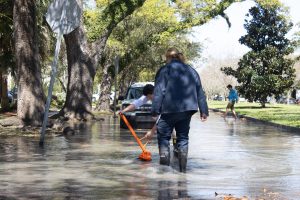
Sewerage and Waterboard workers carry cones to mark open manholes.

-
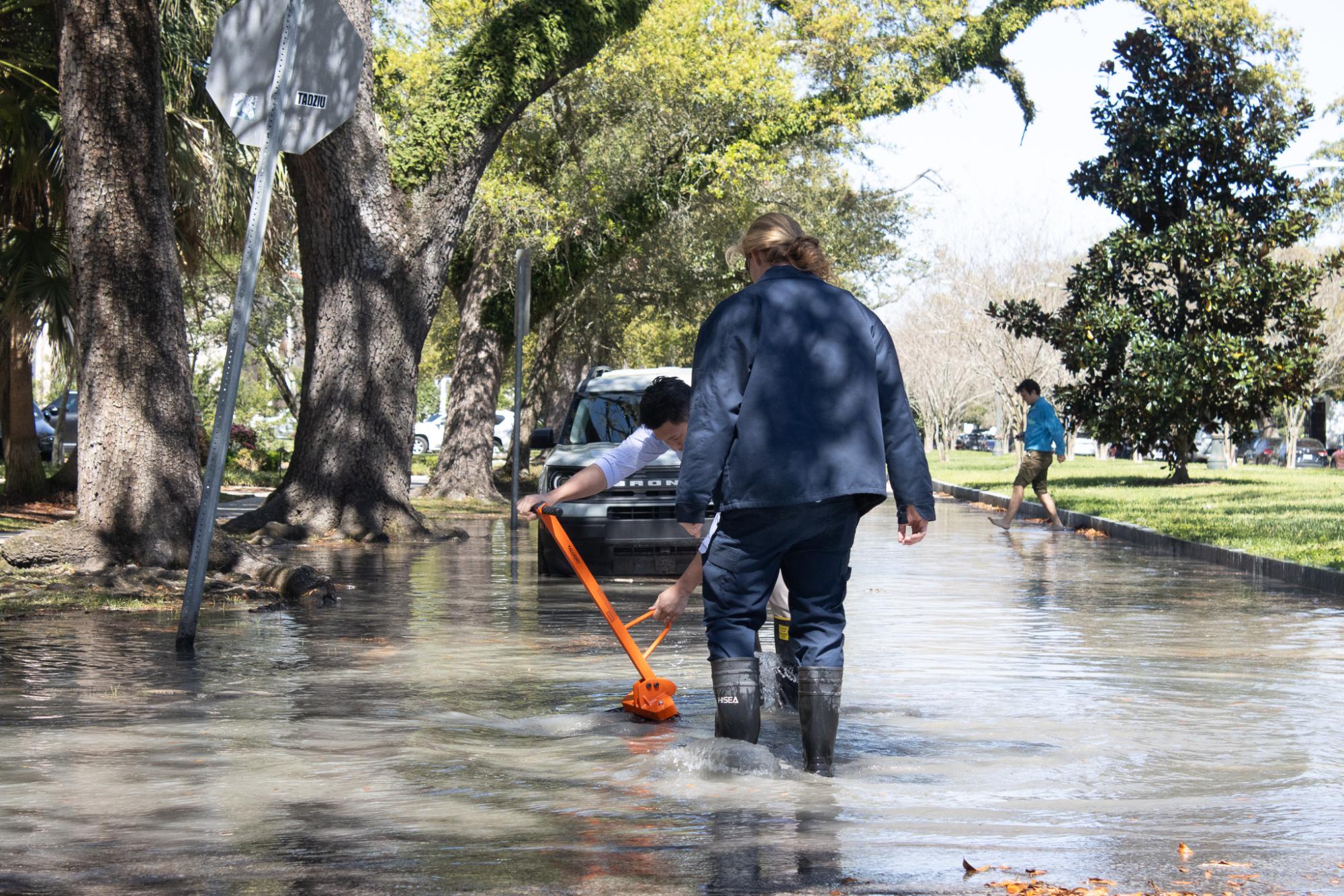
A Sewerage and Water Board worker opens manhole covers to drain floodwater.
-
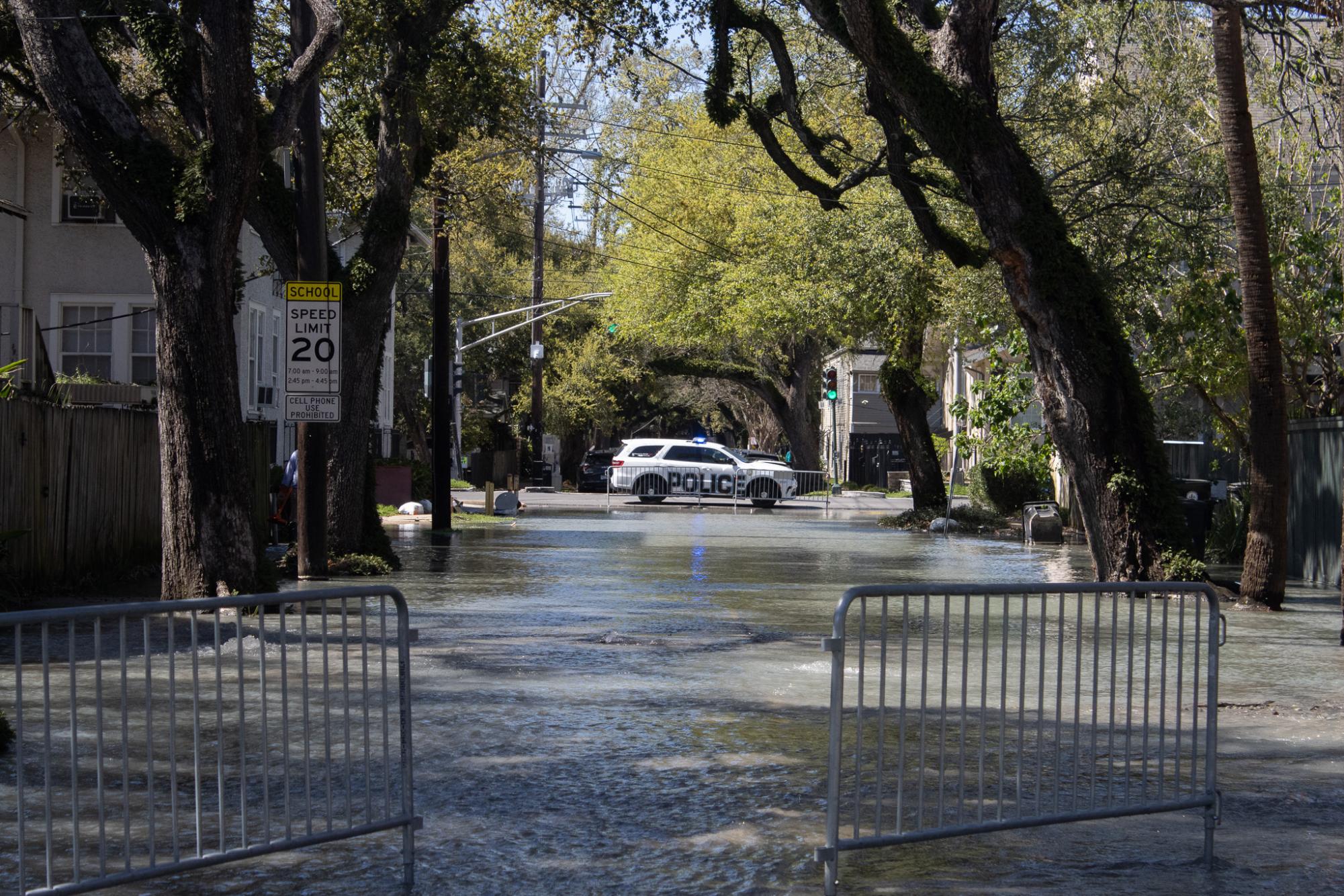
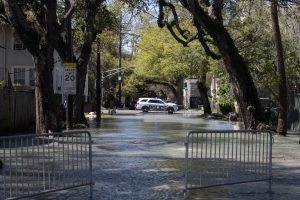
A police car blocks Willow Street after a water main break.
-
A student is pulled by his friend on Audubon Street.

-
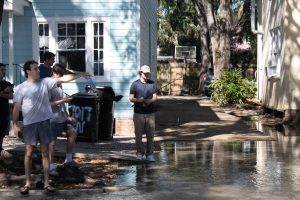
Tulane workers carry a barricade to mark a manhole cover.

-
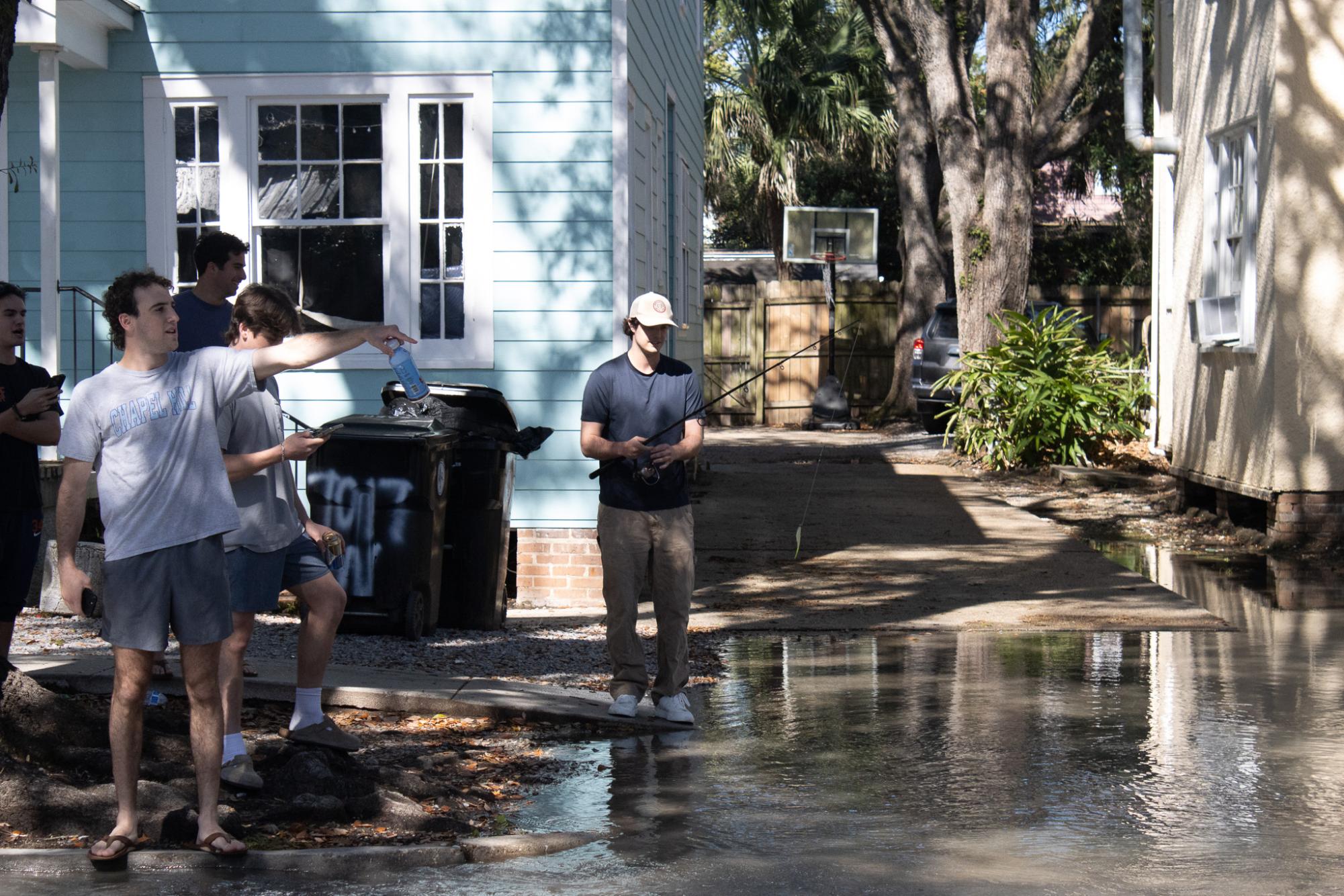
A student fishes on Willow Street.
-
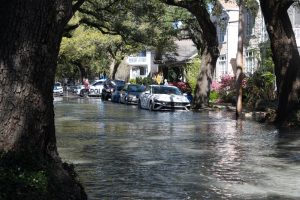
Audubon Street is flooded following a water main break.




The emergency notification “TU Alert: precautionary Boil Water Advisory” has become familiar to Tulane University community members in the last few months.
As water main breaks and flooded streets occur with increasing frequency, frustration is growing over the disruptions to daily life caused by New Orleans’ ailing infrastructure.
New Orleans has seen five water main breaks, a sewer main break and four water boil advisories in the first three months of 2026, the majority of them in the Uptown area near Tulane’s campus.
During the most recent water main break on March 12, Willow and Audubon Streets were flooded with several inches of water. While the city did not issue a boil water advisory for the break, streets are still closed to allow for emergency repairs.
Tulane student Jenna Garfinkle, who lives on the 1400 block of Audubon Street, where the break occurred, recounted high water levels outside of her house. Some residents saw the water main break as an opportunity to take surfboards and fishing poles to their flooded street.
“The whole street was kind of flooded to about knee length and cars out front of my house … were basically submerged under water,” Garfinkle said. “It basically closed off our whole street and we couldn’t drive, walk or anything.”
By Wednesday afternoon, the break had been fixed and the transmission line was reburied. It is unclear when the section of road will reopen.
‘The fountain of youth’
A few blocks away from the corner of Audubon and Willow Streets, residents noticed a leak, which they dubbed the “fountain of youth.” The leak has been on the intersection of Willow and Calhoun Streets since January.
Molly Plenge, Tulane student and Calhoun Street resident, called the Sewerage and Waterboard to report it roughly two weeks ago.
“I get frustrated every time I see it,” Plenge said. “It’s a reminder about how poor the infrastructure here is, and it’s a little bit disheartening to see that it has been there for weeks and nothing has been done about it.”
“That’s one that we have been pushing for months now to be fixed,” New Orleans City Councilmember Aimee McCarron said in reference to the “fountain of youth.”
After the main at Audubon and Willow Streets broke, SWBNO crews worked at the “fountain of youth,” which has stopped leaking.
The repeated breaks make it harder for repairs to be carried out, as crews have to be redirected to perform emergency repairs. Work on a repair on Calhoun Street was paused to allow crews to work at Audubon and Willow Streets.
“It certainly doesn’t help when you have those multiple breaks,” Steve Nelson, the city’s deputy chief administrative officer for infrastructure and director of public works, said.
NOLA’s aging pipes
The breaks have been occurring with accelerating frequency. The first occurred on Jan. 31, after the city had a major cold snap. By March, they were happening just days apart, with three breaks in a nine-day stretch between March 4 and March 12.
Ehab Meselhe, chair of the Department of River-Coastal Science and Engineering at Tulane, attributed the water main breaks to aging infrastructure and environmental factors.
“When a system is not maintained properly on a regular basis, it requires expensive upgrades,” Meselhe said. “Think of it like a car, when not maintained, it eventually breaks down and then it requires a very expensive repair.”
34% of New Orleans pipes are over 100 years old, which is considered the end of their life span.
The problems of aging pipes and poor maintenance are compounded by subsidence, the gradual sinking of an area of land, which New Orleans, in the Mississippi River Delta, is especially prone to. “Since subsidence is non-uniform, it may result in cracking the pipes,” Meselhe said.
Out of the five water main breaks this year, four occurred in or just outside of Uptown, clustered along or near the South Claiborne Avenue corridor.
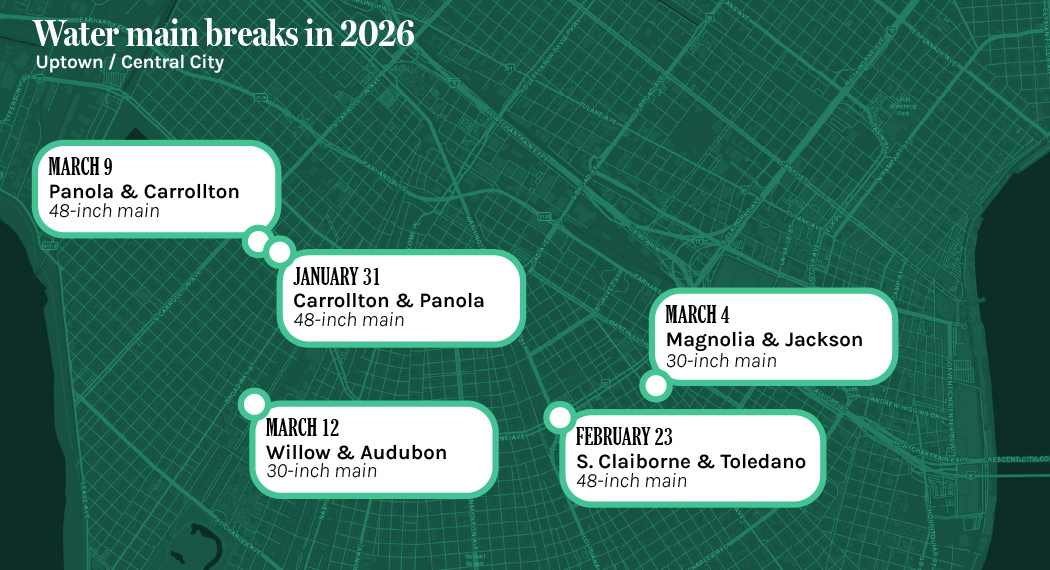
Richard Campanella, a geographer and associate dean for research in the School of Architecture and Built Environment, attributed the cluster of breaks to the location of the water treatment plant on South Claiborne Avenue. Water has to travel through Uptown, which has some of the oldest pipes in the city, to get Downtown, subjecting transmission mains to high pressures.
“Being over a hundred years old, [these pipes] become most prone to the most pressure,” Campanella said.
Who is going to pay?
On Monday, March 16, SWBNO introduced a new plan to stabilize the water transmission system. The first phase involves addressing eight urgent risk transmission mains.
In just three months, SWBNO has already used about 60% of its $3,600,000 2026 repair budget, according to the plan. The estimated cost of fixing the eight urgent risk mains is estimated at $4,500,000.
SWBNO is also planning to replace four more transmission lines that were supposed to be replaced as part of the Joint Infrastructure Recovery Request Program, a $2.3 billion federally-backed program, but were left unaddressed after the program’s funds were expended. The estimated cost of those replacements is $27.5 million.
The new plan estimates the cost of replacing all transmission lines over 100 years old at nearly $680 million, a figure the plan calls “prohibitive.” To replace 60% of pipes would cost over $2 billion, according to the plan.
Later phases of the plan include assessing conditions of the oldest water mains, investigating new technology for pipe monitoring, identifying high-priority repairs and conducting a citywide system assessment.
Where the SWBNO hopes to get the money from is unclear; the board has requested $10 million from the federal government to finish the JIRR replacements according to the plan, but that leaves millions unfunded.
“Everybody’s got to work together on that,” Nelson said, “I know the executive director was up in D.C. lobbying for funds. I know there’s been a request for earmarks for funds, and I know that the state wants to be involved in the solution as well.”
The requests for funds come as the city aggressively cuts spending, furloughs workers and raises fees to avoid a projected $222 million budget deficit that has seen New Orleans’ credit rating downgraded just two notches above “junk” status.
“All solutions involve funding, which may be the biggest hurdle facing us right now,” McCarron said in a statement to The Hullabaloo.
Oversight issues
As the breaks become more of a nuisance for residents, questions are growing over the independence of the Sewerage and Water Board, which operates as a state entity.
The city of New Orleans has power over billing and rate increases, and the mayor sits on the board and has the power to appoint most of its members, but the city has limited oversight of SWBNO’s actual operations.
“We are the ones, as council members and the city, that get all the heat from Sewerage and Water Board, but we have no direct oversight, so we can’t force them to do anything,” McCarron said at the site of the break on Willow and Audubon Streets.
Campanella, the associate dean for research in the School of Architecture, said that the SWBNO operating as a state entity makes dealing with water main breaks less efficient.
“The Sewerage and Water Board is controlled by a wide range of entities without being the specific responsibility of any one,” Campanella said. “It does not answer directly and wholly to the mayor, nor the city council, nor to the state, but involves all of the above.”
“People are frustrated, I’m frustrated and we need answers,” McCarron said at the site of the break on Willow and Audubon Streets.
A poll conducted in June of last year, before the recent breaks, found just 14% of residents approved of the Sewerage and Water Board, while 79% disapproved.
State Rep. Stephanie Hilferty has proposed legislation to give the city more authority over the SWBNO. House Bill 573 would allow the City Council to override portions of state law regarding the board, giving the city council more direct control of the utility. HB 573 has not yet been introduced into the legislature.
The Sewerage and Water Board of New Orleans, State Rep. Stephanie Hilferty and the Mayor’s Office did not respond to requests for comment.
G Hunt • Mar 19, 2026 at 3:05 pm
Perhaps Tulane can start paying taxes which would help the city tremendously. I would love to see a student a story on Tulane’s tax exempt status. The university is a drain on our city.