


The Department of Homeland Security began “Catahoula Crunch” last December, targeting “criminal illegal aliens” with over 200 U.S. Immigration and Customs Enforcement and U.S. Customs and Border Protection agents. Across the country, recent ICE operations have sparked civil unrest and fear. In Minnesota, two U.S. citizens died during encounters with federal immigration enforcement. Those deaths raised a question that feels uncomfortably relevant for New Orleans: Could the same escalation have happened here?
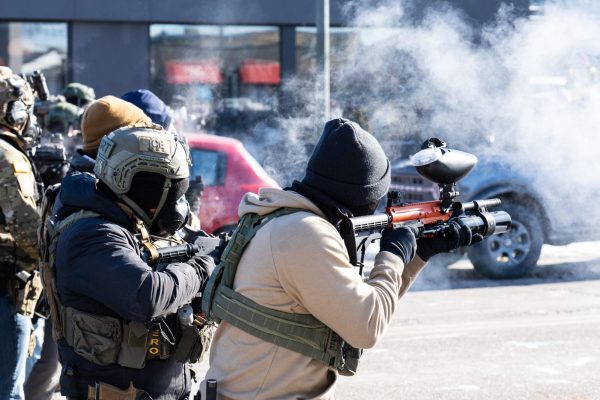
While ICE and CBP presence in New Orleans has not matched the scale of Minneapolis, and local protests have not reached the same intensity, the combination of aggressive enforcement tactics and heightened political tension created conditions that could have made New Orleans vulnerable to the same fatal escalations.
A protest outside New Orleans City Hall turned “chaotic” in early December, leading to officers carrying protestors out of the council chamber. After the Minneapolis shootings, multiple New Orleans advocacy groups organized marches in the French Quarter calling for federal agents and National Guard members to leave the city. These escalating tensions in New Orleans parallel the volatile conditions that turned violent in Minneapolis.
City and local leaders in New Orleans also publicly clashed with ICE and CBP over their lack of transparency and aggressive tactics. At a congressional forum last Tuesday, U.S. Rep. Troy Carter called for ICE to be abolished “as we know it.
New Orleans’ newly elected mayor, Helena Moreno, criticized the operations as “lacking humanity” at the same hearing. Rep. Troy Carter on Tuesday called for ICE to be abolished “as we know it.”
Those concerns are underscored by incidents in New Orleans that mirror the aggressive tactics seen in Minneapolis. In December, a video obtained by AP News shows federal agents chasing a U.S. citizen back into her home after two masked agents approached her on her trip home from a corner store. This confrontational behavior could have easily produced the same tragic outcomes seen in Minneapolis.
The encounter escalated when the woman’s stepfather confronted the agents, sparking outrage from local groups such as Union Migrante, a New Orleans-based grassroots organization, which accused the agents of racially profiling Hispanic residents.
Between residents who have loudly opposed ICE and CBP’s presence, sharply critical local officials, and federal agents using aggressive, escalatory tactics, New Orleans reflects many of the same political and structural conditions that pushed Minneapolis to the brink.
If the same fatal incidents occurred in New Orleans — located in a deep red state whose governor has welcomed the actions of ICE and CBP — the city would have likely received much less support and outrage from state lawmakers.
Under these conditions, New Orleans was not simply similar to Minneapolis. It stood fundamentally vulnerable to the same threat of deadly escalation from federal operations.
What happened in Minneapolis could have happened anywhere in the country, and it doesn’t just start at the federal level; it’s local and it’s human. New Orleanians have the power to shape how federal enforcement operates nationwide, and it starts with demanding transparency, holding our leaders accountable and emphasizing community safety.
Coyote • Feb 2, 2026 at 9:16 am
“ New Orleanians have the power to shape how federal enforcement operates nationwide, and it starts with demanding transparency, holding our leaders accountable and emphasizing community safety. ”
Who is supposed to be transparent? Which leaders? Are we talking about local or federal here?