


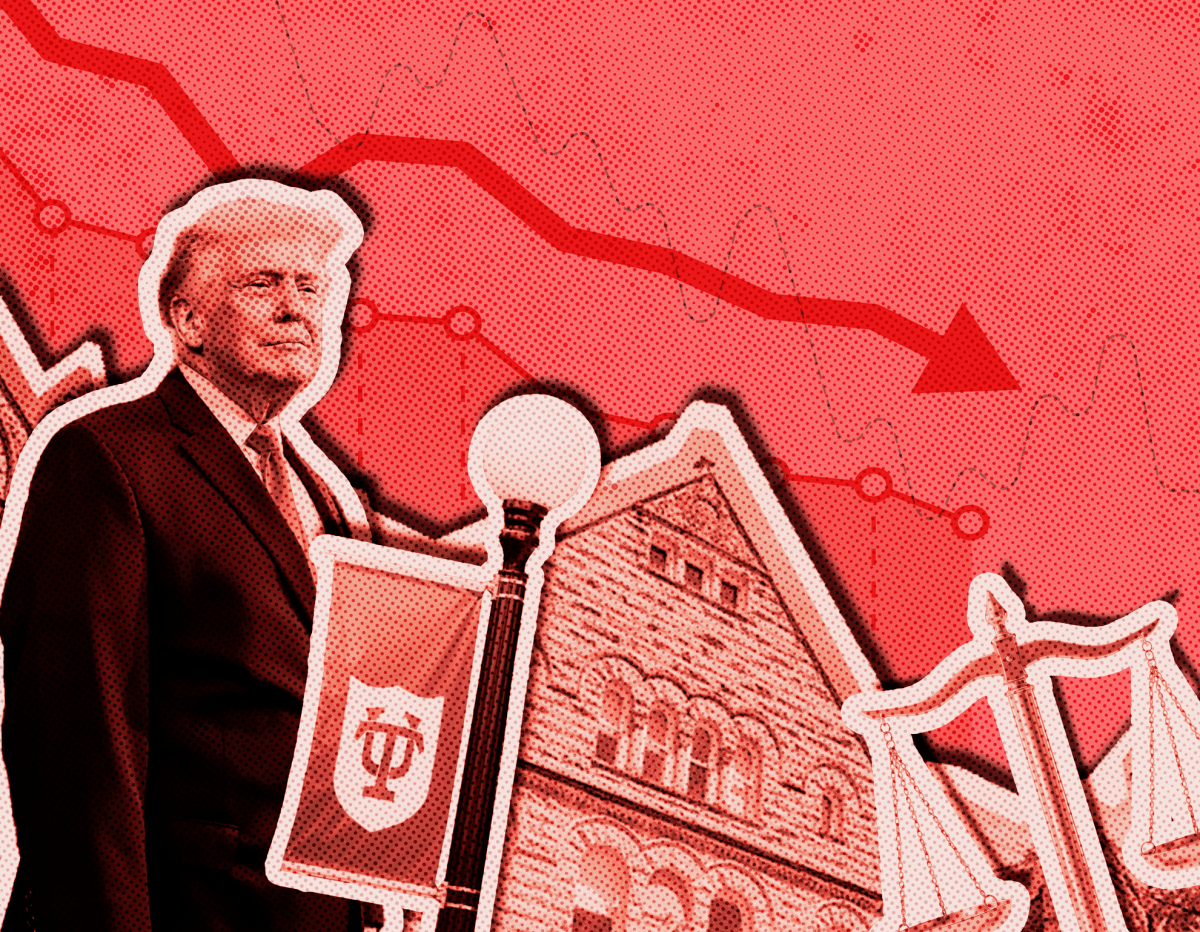
The U.S. Department of Education published a letter in February 2025 stating that every educational institution using race-conscious and diversity, equity and inclusion practices was at risk of losing federal funding.
A year later, the department dismissed its appeal of a federal court decision that blocked the enforcement of the letter nationwide in January 2026. However, the aftermath of similar federal initiatives to combat DEI on college campuses is still unfolding at Tulane University one year later.
2 Civil Rights investigations
Tulane received a letter from the U.S. Department of Education on March 10, 2025, stating that they were under investigation for alleged “relentless antisemitic eruptions,” potentially violating Title VI of the Civil Rights Act.
The letter was based on a complaint alleging Tulane failed to protect Jewish students after a series of pro-Palestine protests in October 2023.
The U.S. Commission on Civil Rights announced it would officially begin its investigation last month after it was previously postponed due to the 2025 government shutdown. The Commission is expected to release a final report by the end of this year.
Four days after the initial letter, Tulane was placed under a second federal investigation for its partnership with The PhD Project, an alleged violation of Title VI of the Civil Rights Act.
The PhD Project is a nonprofit that aims to promote diversity in graduate programs.
On Feb. 19, 2026, the U.S. Department of Education named Tulane on a list of 31 colleges and universities that agreed to end their partnerships with The PhD Project.
According to Tulane spokesperson Michael Strecker, the university never hired any faculty through the program.
Offices shuttered
On March 13, 2025, Tulane replaced its Office of Equity, Diversity and Inclusion with the Office of Academic Excellence and Opportunity. According to a statement from Tulane President Michael Fitts, the shift was a result of the Trump administration’s threats to strip Tulane of over $320 million in federal funding.
Today, AEO oversees the AEO Professional Development Program and the Intercultural Leadership Program.
“Our focus remains on creating educational opportunities, leadership development programs, and community-building initiatives that help Tulane be a place where people from all backgrounds, perspectives, and worldviews can learn, contribute and succeed,” AEO Chief Officer Anneliese Singh said in a statement.
In March 2025, Tulane quietly dissolved the Office of Gender and Sexual Diversity.
Following the dissolution, a Tulane Queer Student Alliance member received an email alerting them that the office no longer exists.
The email stated that former OGSD-specific programs would fall to the Carolyn Barber-Pierre Center for Intercultural Life. In August, a Tulane administrator emailed QSA members that Q Spot, the group’s meeting space since 2021, would be closed indefinitely.
“Tulane isn’t letting people know what’s happening. They have been essentially trying to sweep this under the rug,” QSA President senior Billy Bernfeld said.
In October 2025, QSA members were informed that their belongings had been moved to a storage room in Richardson Building, which would also function as their new meeting space.
“Quite honestly, I think it’s insulting,” Bernfeld said. “Not only that the remnants of the Q Spot were just thrown around … but that they think we believe that this is in any way a viable substitute for a community gathering space.”
Tulane’s Black Queer Collective and the Gender Exploration Society also used the Q Spot for meetings and resource drives.
“OGSD was the one place that students felt they could authentically be themself and with the closing of that it sends a clear message about who belongs here and who doesn’t,” GES Vice President and BQC public relations member Kioja Johnson said. “This is a time where students’ rights are under attack, and instead of offering them support, they snatch the one space that they have on campus from us.”
Soon after, Tulane shuttered its Office of Multicultural Affairs without announcement, which housed the Black Student Union and other student groups. According to Strecker, OMA was also absorbed into the CIL.
All online traces of OGSD and OMA have been wiped from Tulane’s website and social media platforms.
Affirmative action reversed
In June 2023, the U.S. Supreme Court reversed its decision on affirmative action, effectively ending race-conscious admissions programs at colleges and universities nationwide.
Affirmative action, established in 1961, was aimed at addressing systemic discrimination against Black Americans and other marginalized groups in employment and education.
Tulane’s admissions process included affirmative action programs for both higher education and employment. Since the ruling, the percentage of Black students enrolled at Tulane appears to have slightly increased.
“We foster a community in which everyone, including first-generation students, veterans and people of different races, nationalities and faiths have an equal opportunity to achieve their dreams and contribute to our mission,” Tulane spokesperson Michael Strecker said in a statement.
“We create new ideas and breakthroughs because we are home to Tulanians from numerous perspectives and walks of life who engage in the widest fields of inquiry and work within a vast variety of disciplines and departments.”